

Documenting discussions, key decisions, and assigned responsibilities during corporate assemblies is vital for organizational accountability. A formal meeting minutes template (also known as a meeting log, protocol sheet, or action items summary) serves as the official written record of proceedings for board meetings, team standups, and committee sessions.
Whether you need a flexible MS Word meeting minutes sheet for narrative note-taking or an structured Excel action log with automated deadline tracking, using standardized layouts ensures key takeaways are never lost.
Below, explore essential guidelines for taking effective meeting notes, statutory recording requirements, and access over 25 free, customizable templates ready for instant download.
What Are Meeting Minutes and Why Are They Essential?
Meeting minutes are the official, tangible record of a meeting for its participants and stakeholders who were unable to attend. Rather than acting as a word-for-word transcript of every spoken sentence, well-crafted minutes capture the key decision points, voting outcomes, and actionable next steps established during the session.
Strategic Benefits of Standardized Meeting Notes
- Legal & Compliance Protection: For corporate boards, non-profits, and government entities, meeting minutes serve as legal proof of due diligence, fiduciary compliance, and formal resolutions.
- Clear Action Item Tracking: Designates explicit ownership for tasks, setting firm deadlines so project deliverables stay on schedule.
- Organizational Memory: Provides an immutable historical record of why specific strategic decisions were made, preventing repetitive debates in future sessions.
- Alignment for Absent Members: Allows team members who could not attend to quickly catch up on key announcements and structural updates.
Key Components of a Professional Meeting Minutes Sheet
To ensure your document remains legally sound and easy to navigate, every meeting minutes format should organize information into these essential structural elements:
1. Basic Meeting Metadata
Always begin with foundational logistical information:
- Organization & Department Name: Official company or team title.
- Meeting Title / Topic: Purpose of the assembly (e.g., Q3 Marketing Strategy Alignment).
- Date, Time, and Location: Exact date, start/end timestamps, and physical room or virtual meeting link (e.g., Zoom/Teams URL).
- Meeting Chair & Secretary: Full names of the person leading the meeting and the individual designated as note-taker.
2. Attendance & Apologies List
Maintain an accurate record of presence:
- Present Members: Full list of attendees present during the session.
- Absent / Apologies: Members who formally submitted advance notification of absence.
- Guests / Presenters: External consultants or guest speakers invited for specific agenda items.
3. Approval of Previous Minutes
In formal corporate or board environments, the minute-taker records whether the summary of the preceding assembly was formally reviewed, amended, or approved as written.
4. Agenda Items & Key Discussion Summary
Structure the body of the document by following the distributed meeting agenda:
- High-level summary of arguments, reports, or proposals presented for each topic.
- Concise bullet points capturing major consensus or points of contention.
5. Motions, Votes, and Official Decisions
Record all formal actions clearly:
- The exact wording of any motion introduced.
- Names of members who moved and seconded the motion.
- The final vote count (Passed, Defeated, or Deferred).
6. Action Item Matrix (Task Assignment Table)
A dedicated, scannable table mapping out post-meeting commitments:
- Action Description: Specific task to be executed.
- Assignee: The individual or team responsible for execution.
- Due Date: Firm deadline for completion.
7. Adjournment & Next Meeting Details
Note the official time the meeting concluded and the tentative date/time scheduled for the subsequent assembly.
MS Word vs. Excel vs. PDF: Selecting the Best Format
- MS Word (.docx): Best suited for narrative-driven sessions, board meetings, and committee reviews where detailed discussions and formal motions need clean typography.
- MS Excel (.xlsx): Ideal for project status meetings and Agile standups where tracking action items, conditional formatting, and filtering by task owner are necessary.
- Printable PDF (.pdf): Perfect for distribution as a read-only archive once the minutes have been officially approved by the meeting chair.
5 Practical Tips for Taking Clear Meeting Minutes
Transcribe and Distribute Promptly: Write up the final minutes within 24 hours while the discussion details remain fresh in your mind.
Prepare Ahead of Time: Obtain a copy of the meeting agenda beforehand and use it as a structural outline for your notes.
Focus on Decisions, Not Dialogue: Do not try to write down everything said. Focus on capturing what was decided, agreed upon, or assigned.
Be Objective and Neutral: Record facts, figures, and decisions using unbiased language. Avoid inserting personal opinions or emotional commentary.
Clarify Action Items Immediately: If an agreement is made without a clear owner or deadline, interrupt briefly to confirm who is responsible before moving to the next agenda item.
Sample Meeting Minutes Templates Are Here
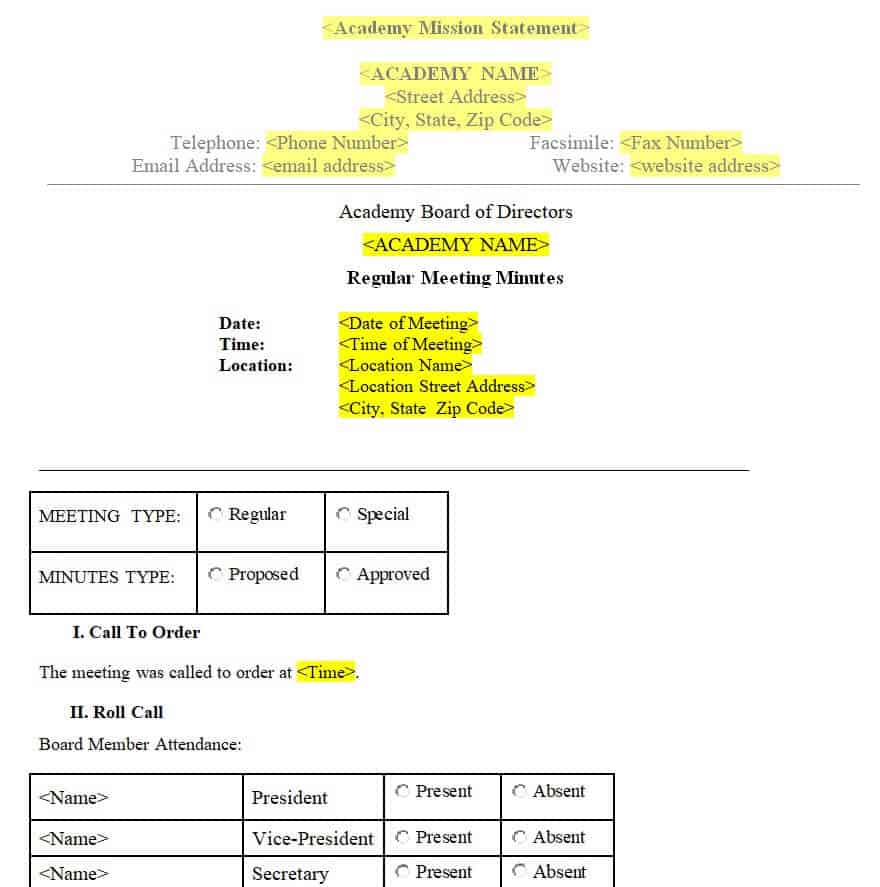
Regular Meeting Minutes Template
File Size: 44 KB
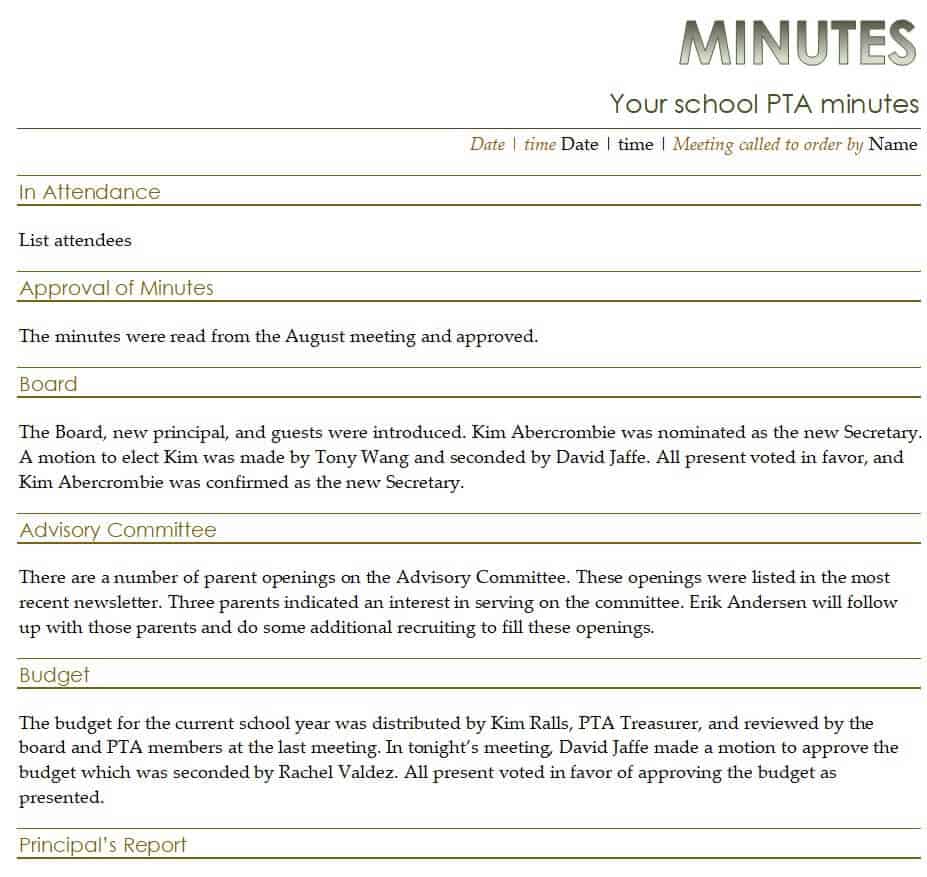
School PTA Meeting Minutes Template
File Size: 50 KB
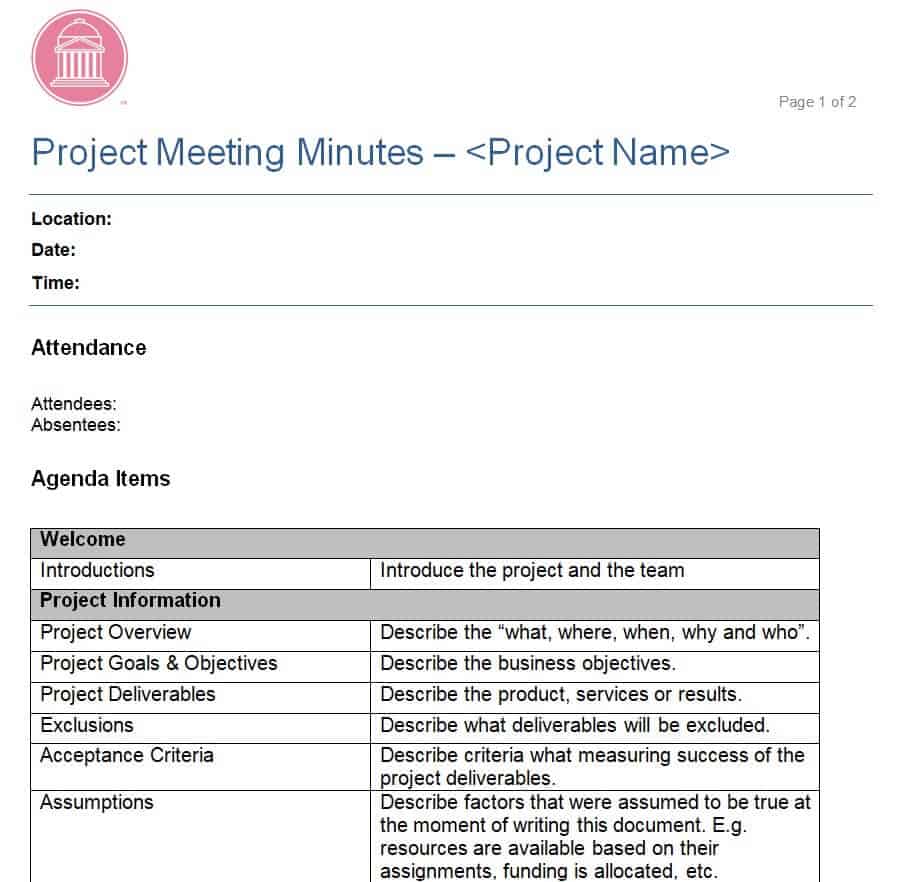
Project Meeting Minutes Word Template
File Size: 37 KB
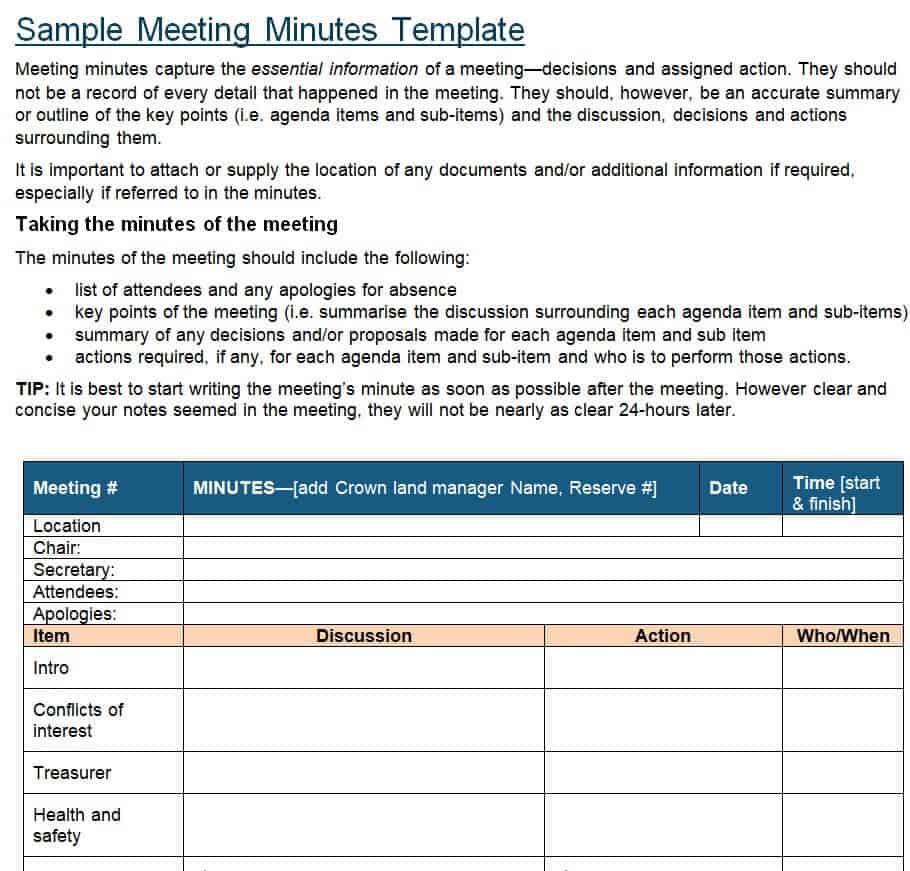
Sample Meeting Minutes Template
File Size: 19 KB
Agenda and Meeting Minutes Template in MS WORD
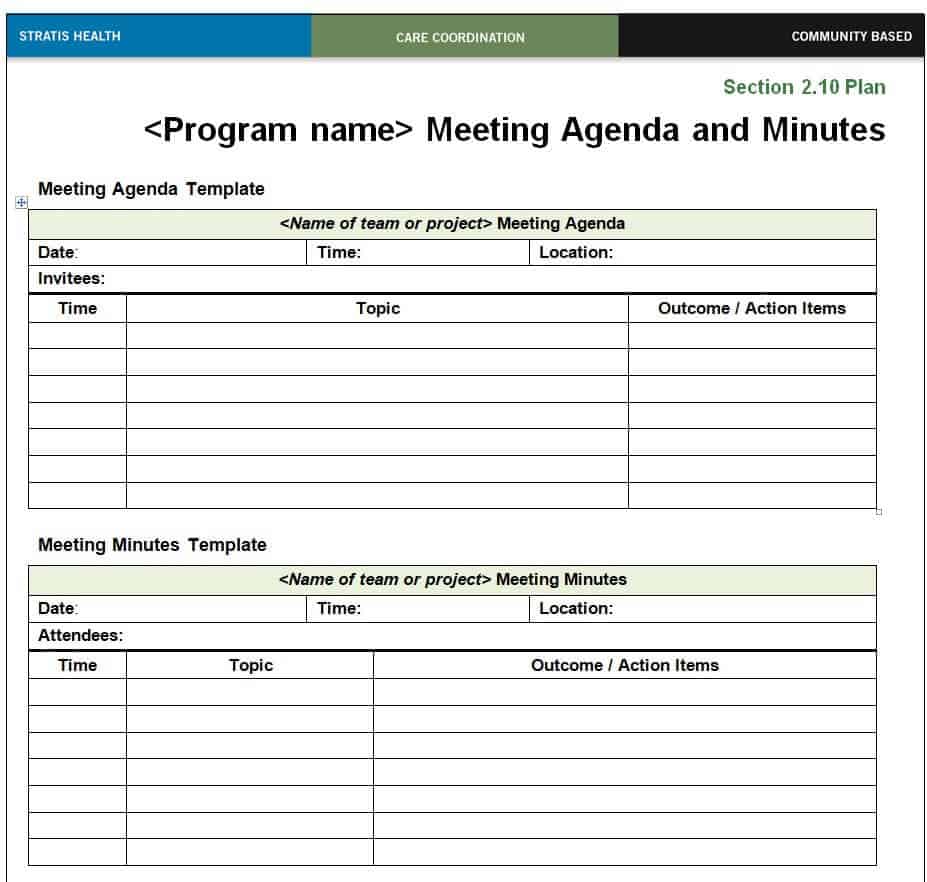
File Size: 01 MB
Health & Safety Committee Meeting Minutes Template
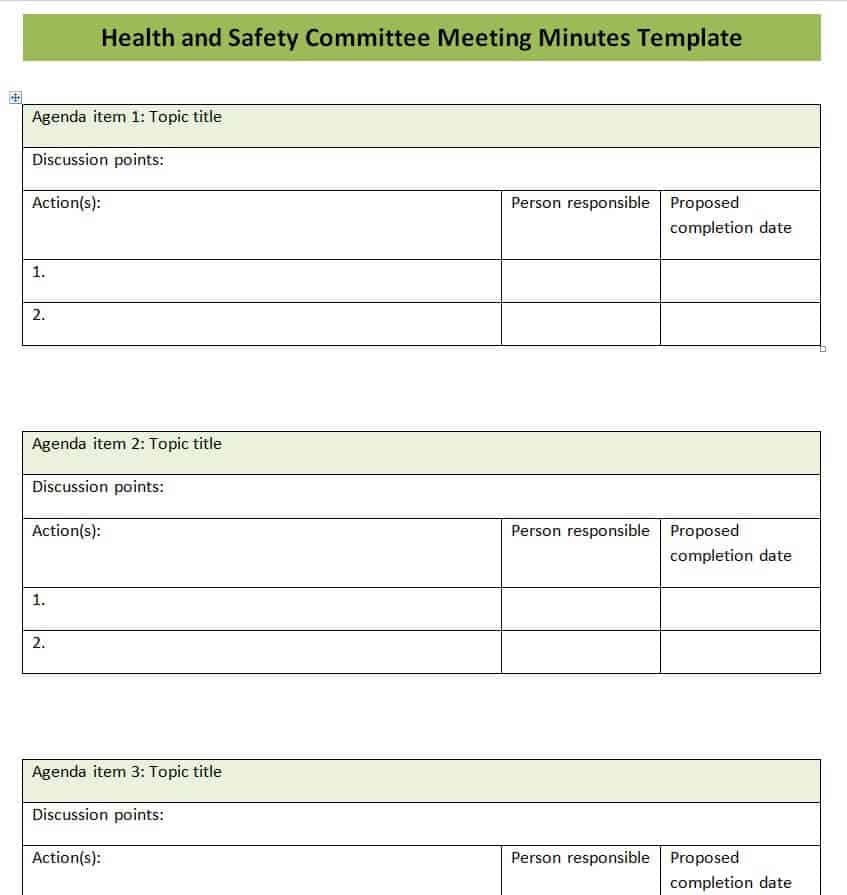
File Size: 11 KB
Short Form Meeting Minutes Sample
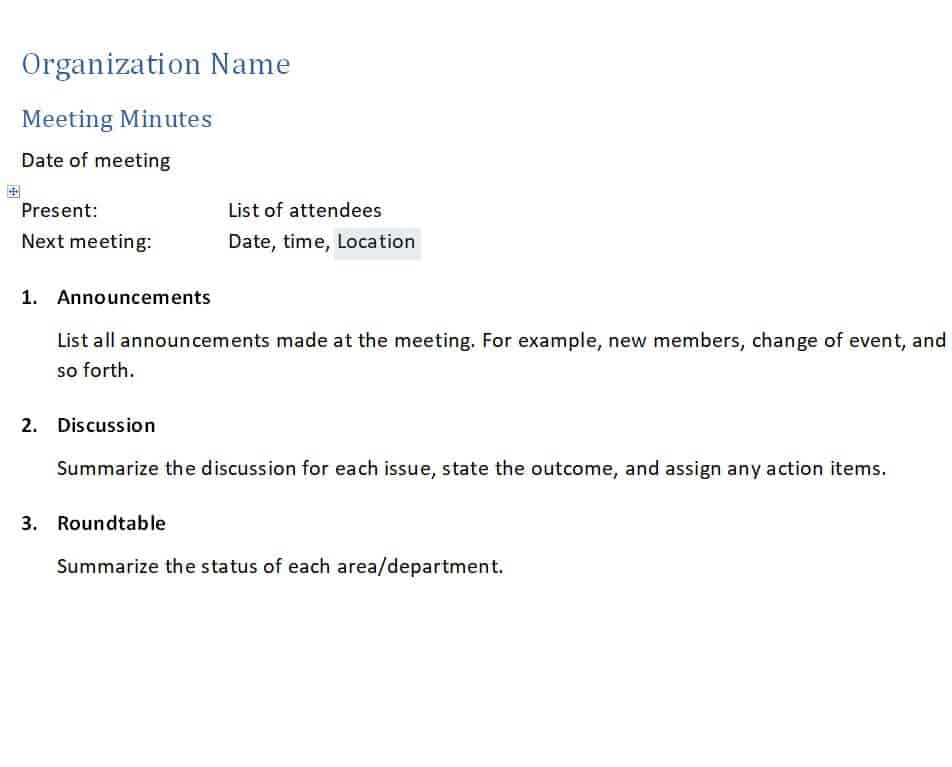
File Size: 45 KB
Development Meeting Minutes Template in WORD
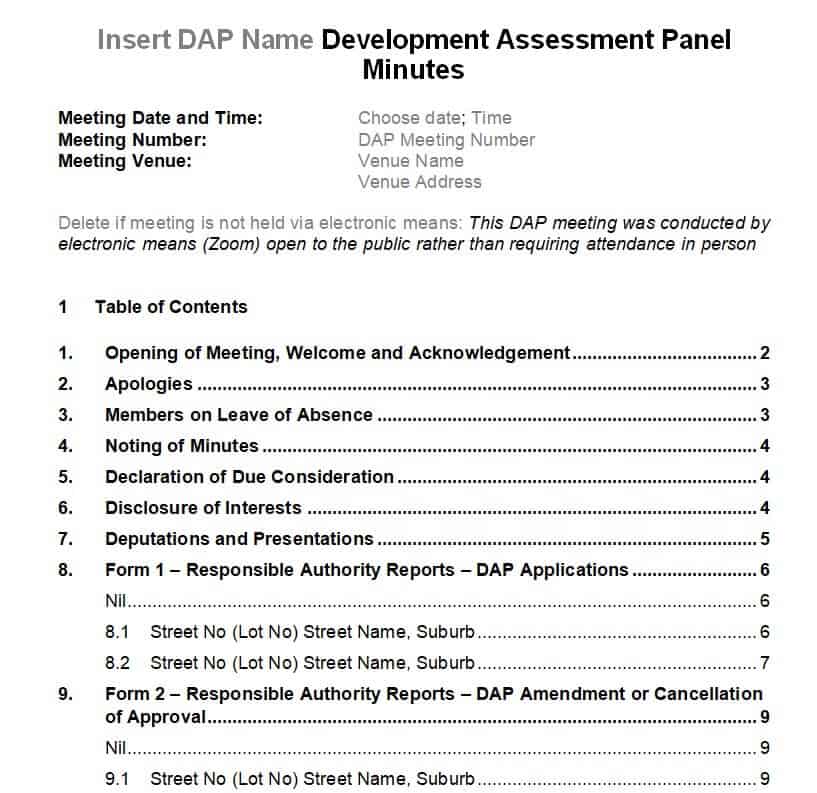
File Size: 235 KB
Standard Meeting Minutes Format
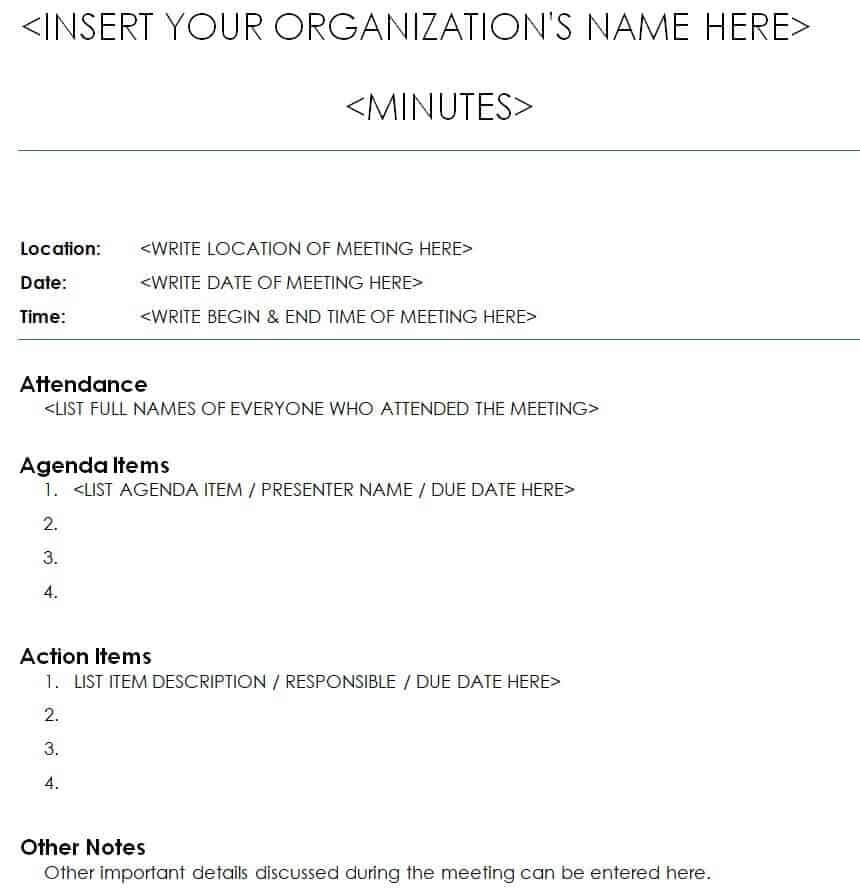
File Size: 17 KB
Sample Project Meeting Minutes Template
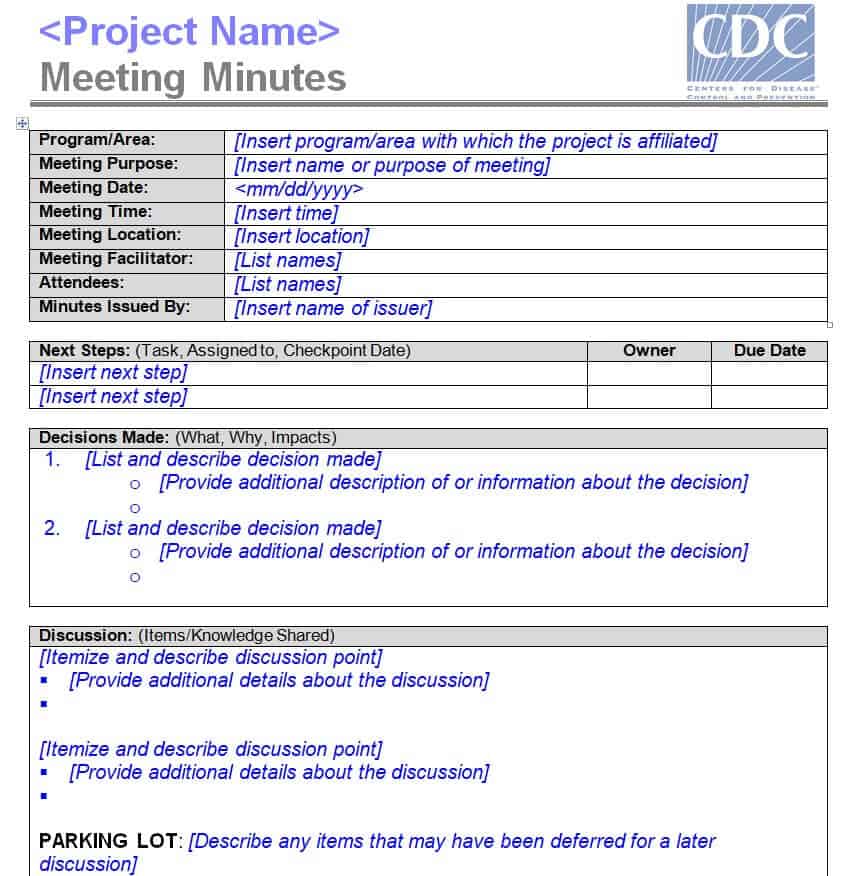
File Size: 192 KB
Free Editable Meeting Minutes Template
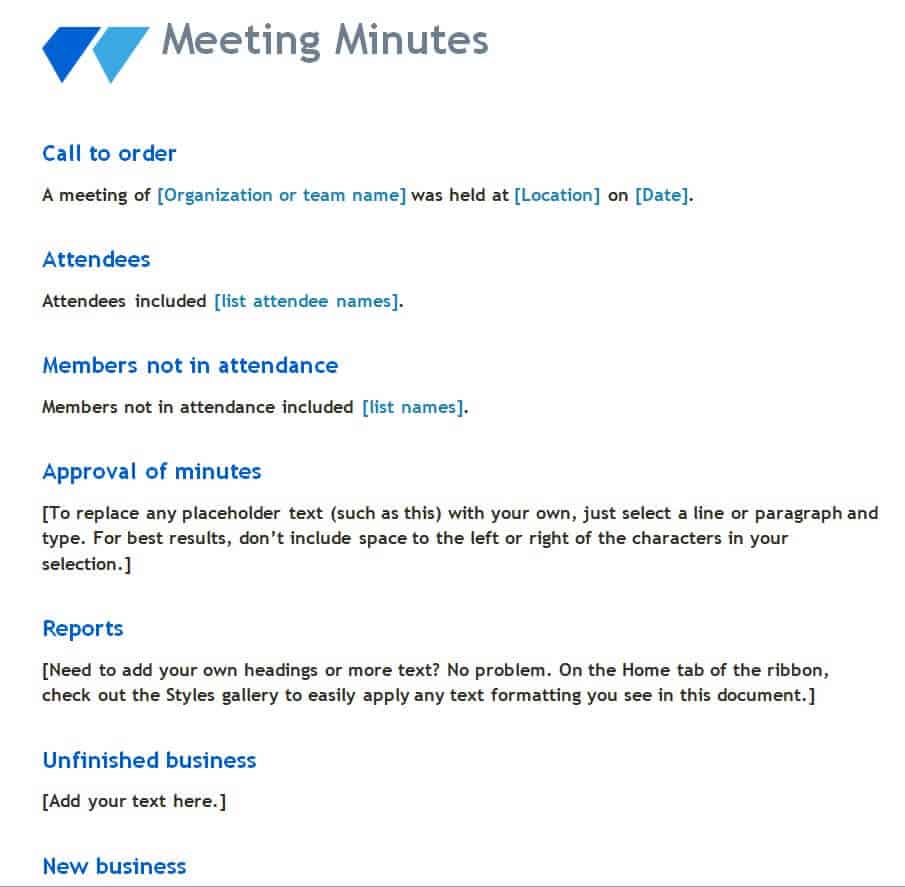
File Size: 39 KB
Professional Meeting Minutes Template in DOC Format
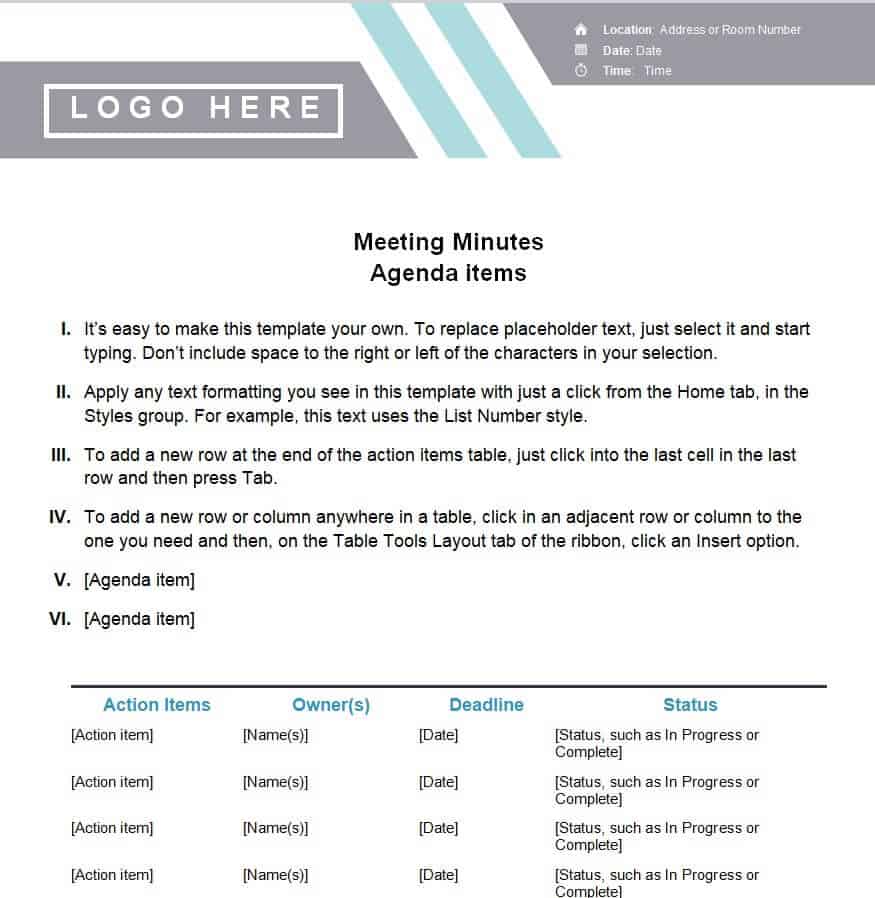
File Size: 94 KB
Departmental Meeting Minutes Example
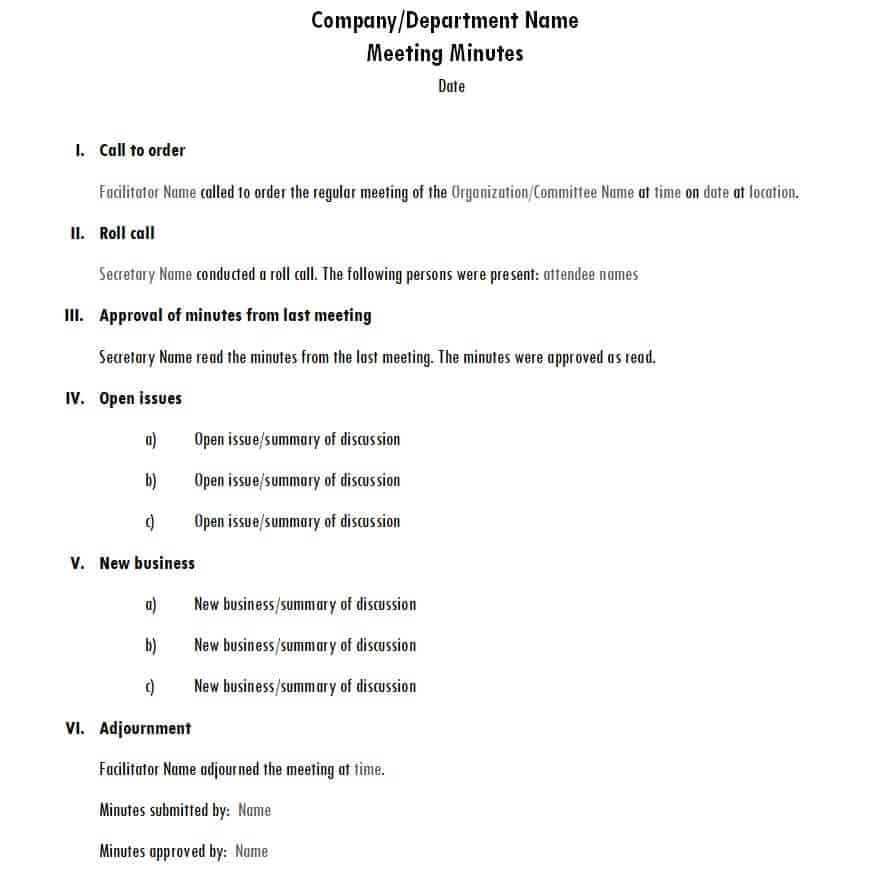
File Size: 32 KB
Club’s Executive Committee Meeting Minutes Template
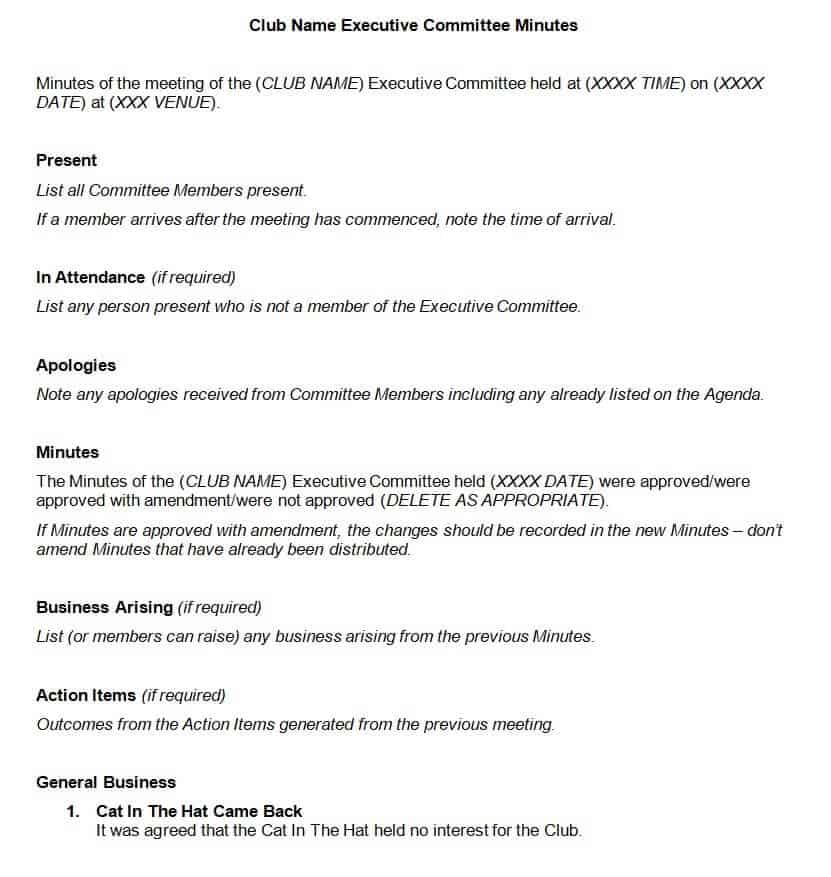
File Size: 14 KB
Formal Meeting Minutes Format
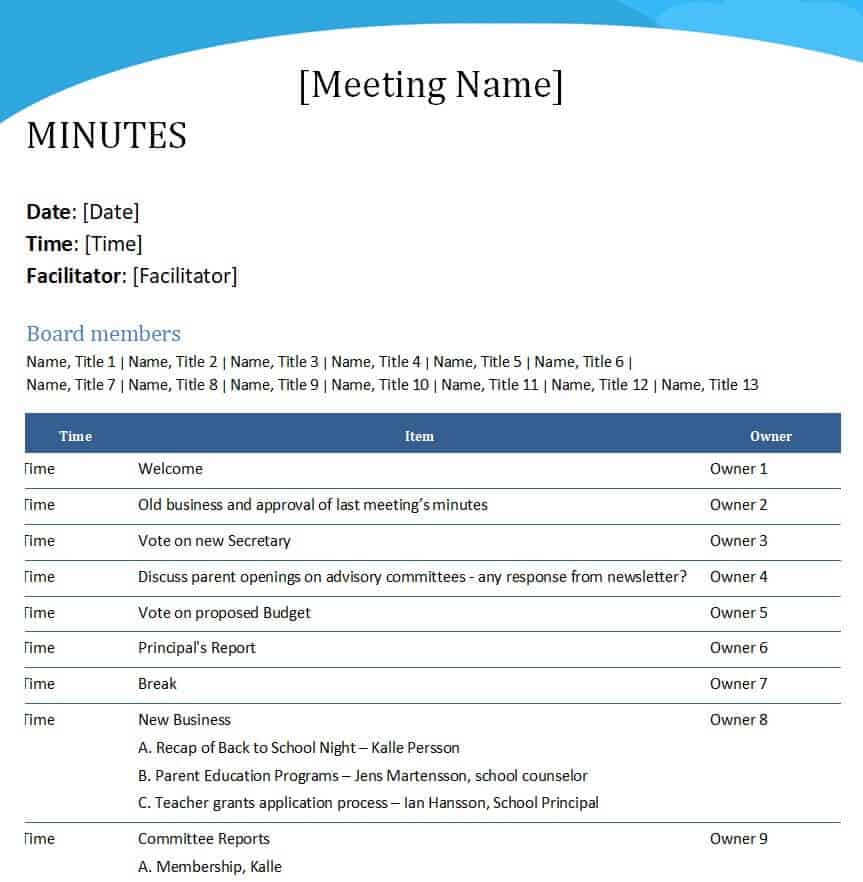
File Size: 147 KB
Why it is Important to Record or Take Meeting Minutes?
Meeting minutes are one of the important official documents of a company. It must be recorded and prepared in such a way so that any other person can easily understand what actually happened at the meeting.
Preparing the minutes of a meeting does not mean that the minutes must include all the details or actions word by word. The main purpose is to actually record only the important details and happenings of a meeting. Following are some other key benefits of meeting minutes that will further indicate the purpose and importance of the minutes:
- In some cases, meeting minutes may be required to be shared with the shareholders or any other stakeholders by law. That is why it becomes important to record and keep the minutes of a meeting.
- The meeting minutes indicate the decisions made in a particular meeting and the future plans or steps to implement those decisions.
- The minutes of a meeting help present the detailed happenings of a meeting in a properly organized way.
- It is useful for those who could not attend the meeting as well as the attendees of the meeting. For those who could not attend the meeting, the minutes help them easily understand what actually happened at a particular meeting.
- The meeting minutes can be of great importance for any future references.
- Meeting minutes play an important part in reminding the participant(s) of the meeting about their responsibilities.
- Recording the minutes of a meeting in an effective way is the best way for the organization’s executive management to stay transparent. This way they can not be accused of concealing any type of important information or detail.
- Minutes can be of great help to indicate the proof of a certain decision or action.
Official Meeting Minutes Templates Are Here
Classic Style Meeting Minutes Template
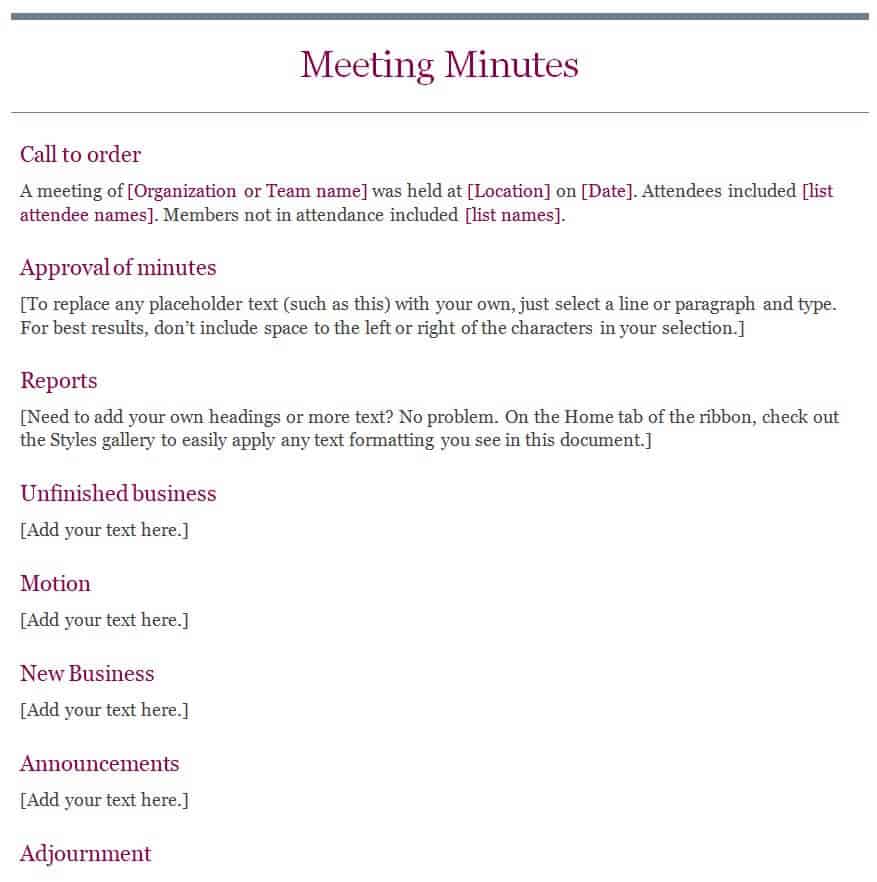
File Size: 37 KB
Charity’s Meeting Minutes Document

File Size: 31 KB
Fillable Meeting Minutes Template MS WORD
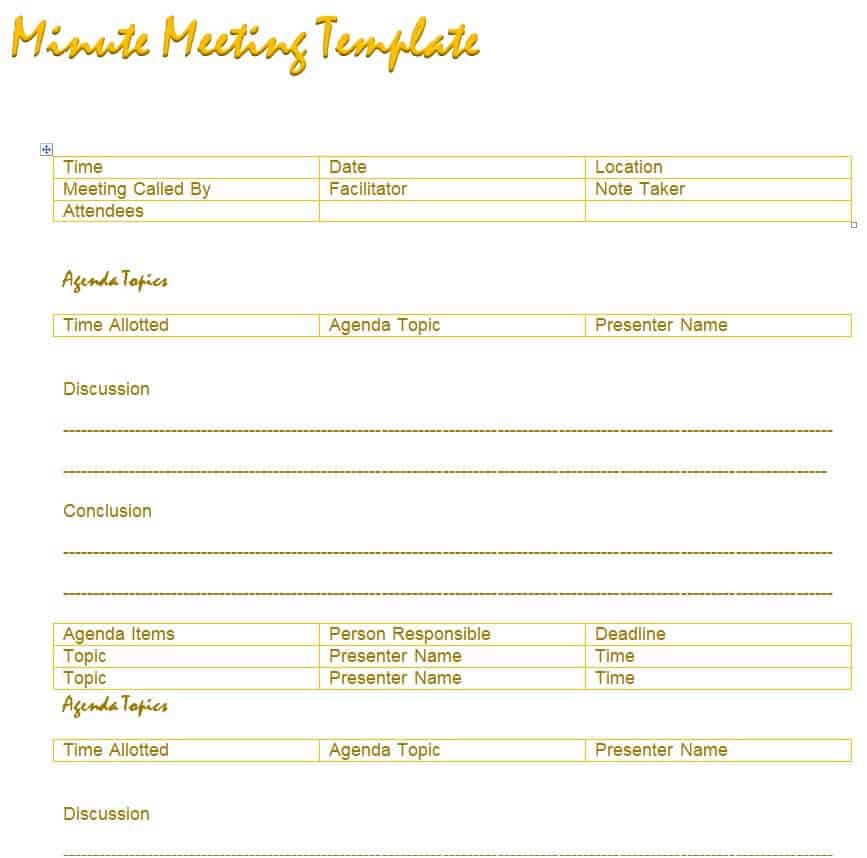
File Size: 18 KB
Official Meeting Minutes Template
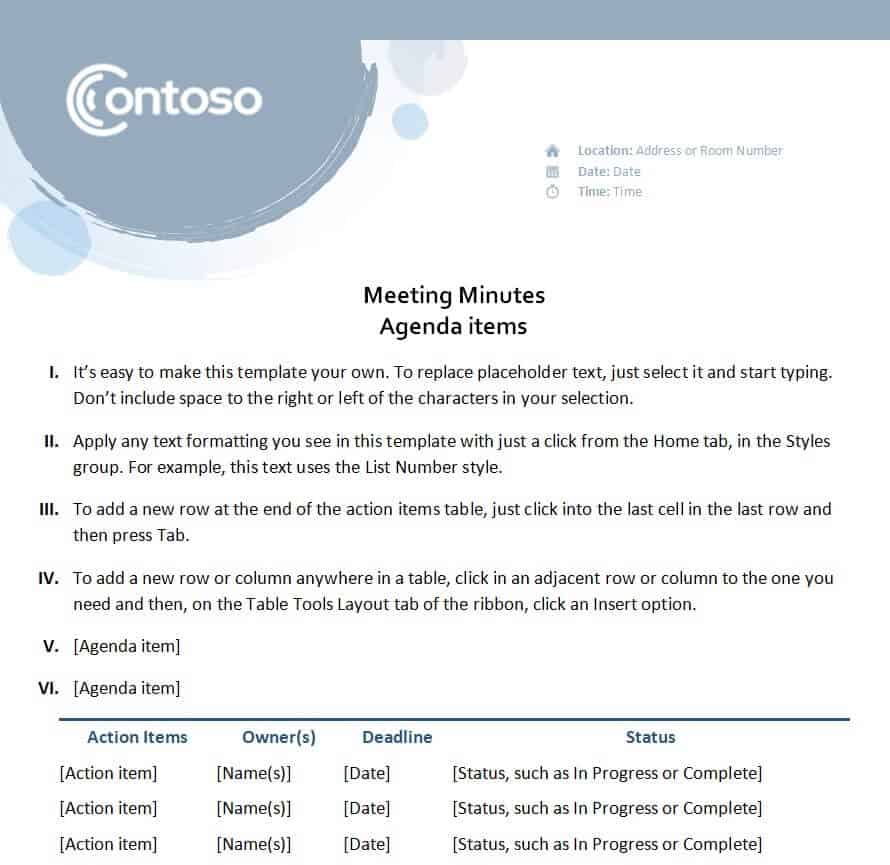
File Size: 01 MB
Detailed Meeting Minutes Format
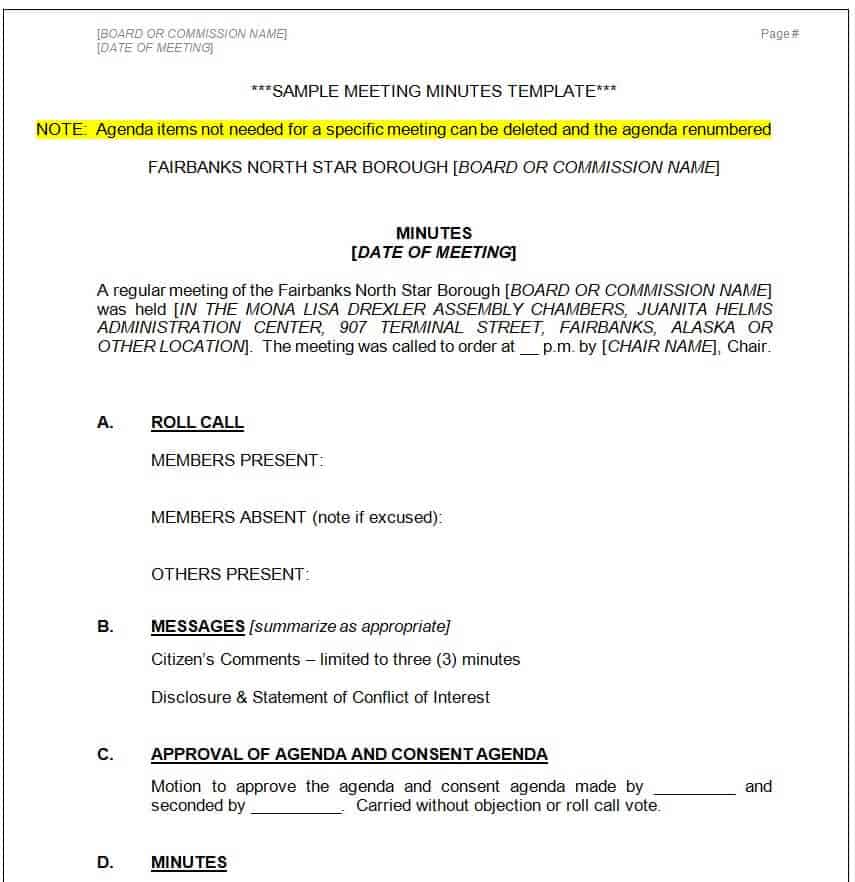
File Size: 45 KB
Blank Meeting Minutes Doc Template
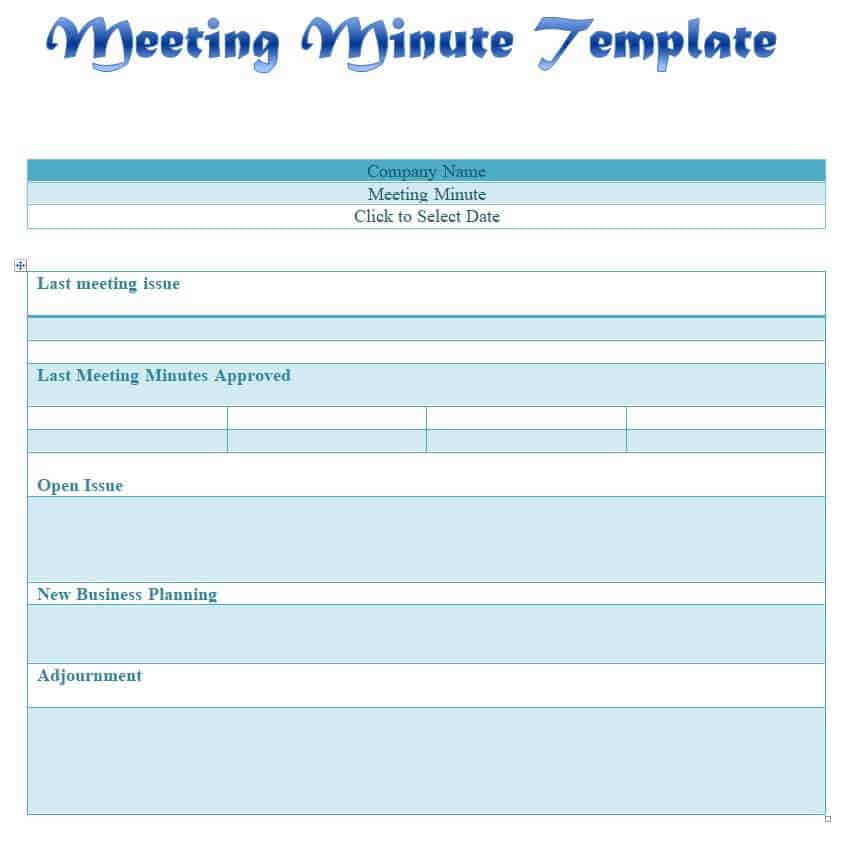
File Size: 19 KB
Customizable Site Meeting Minutes Template
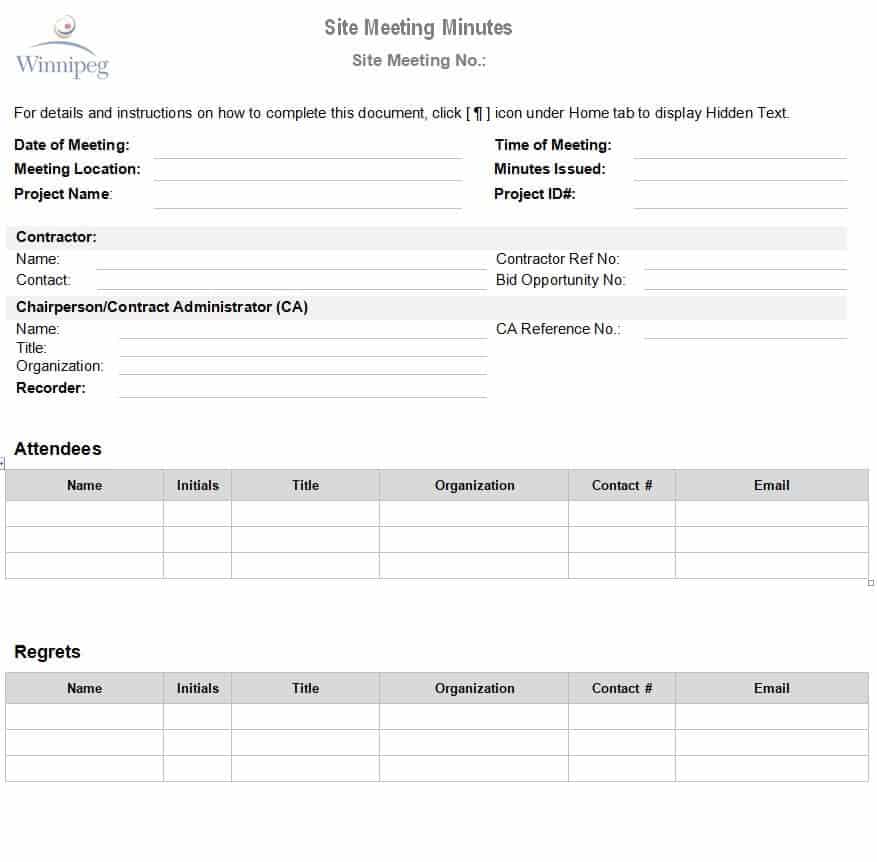
File Size: 207 KB
Organization’s Formal Meeting Minutes Sample
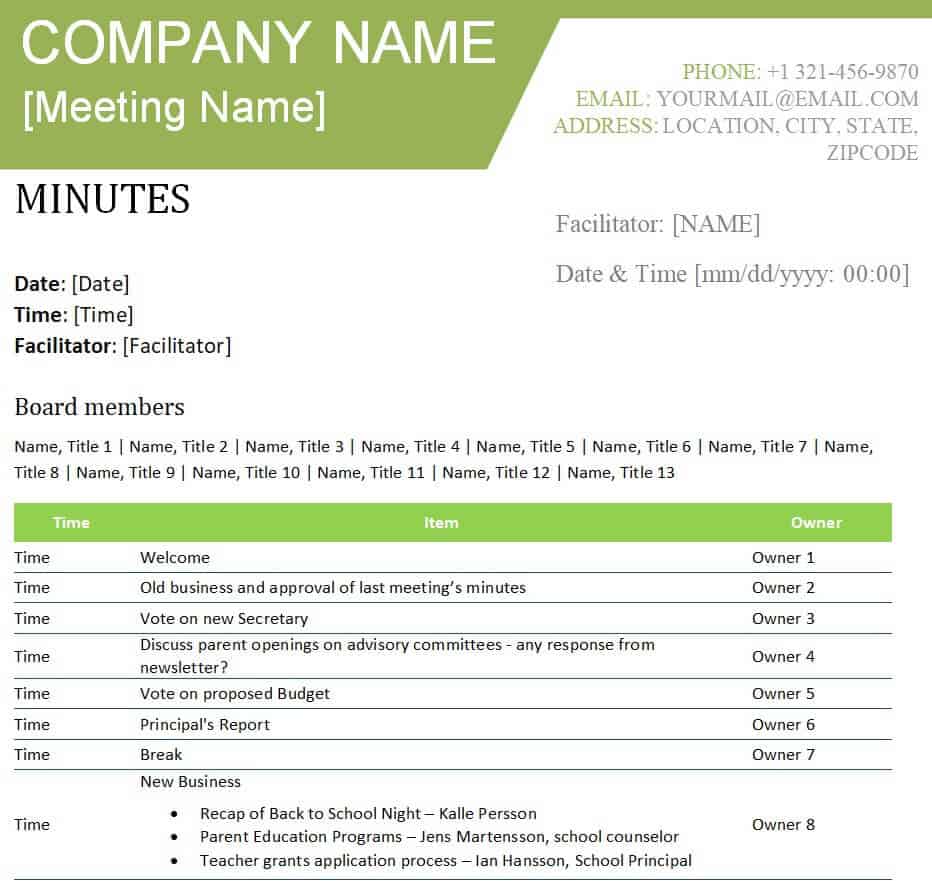
File Size: 70 KB
Simple Committee Meeting Minutes Example
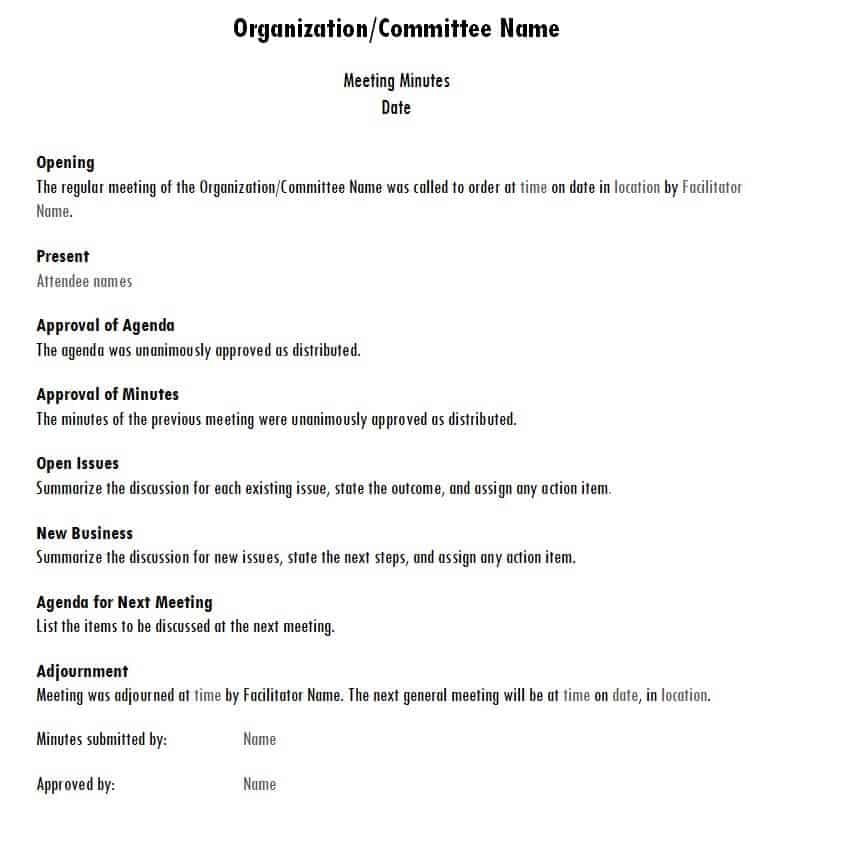
File Size: 27 KB
Academic Meeting Minutes Template in Word
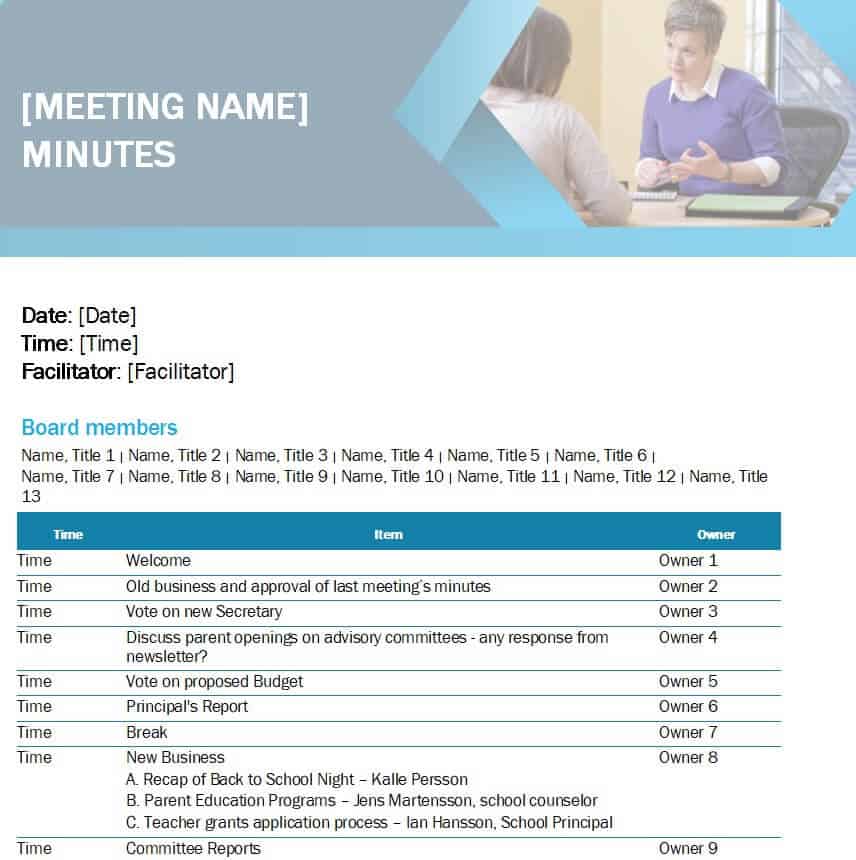
File Size: 241 KB
Basic Meeting Minutes Template
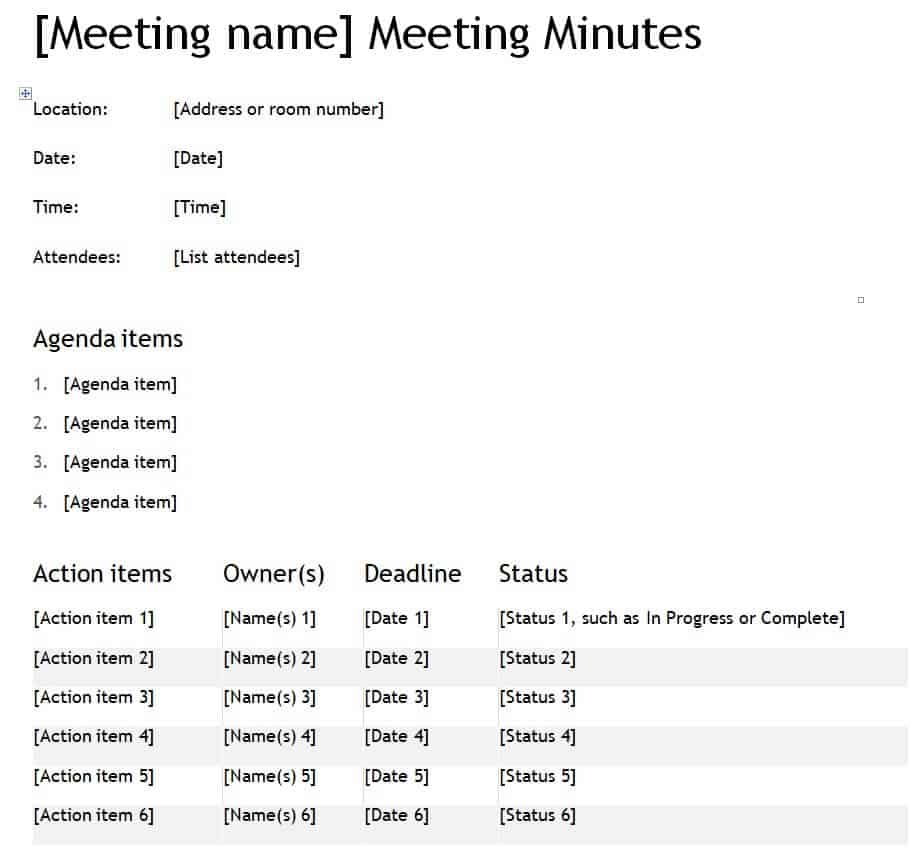
File Size: 93 KB
Management Committee Meeting Minutes Template
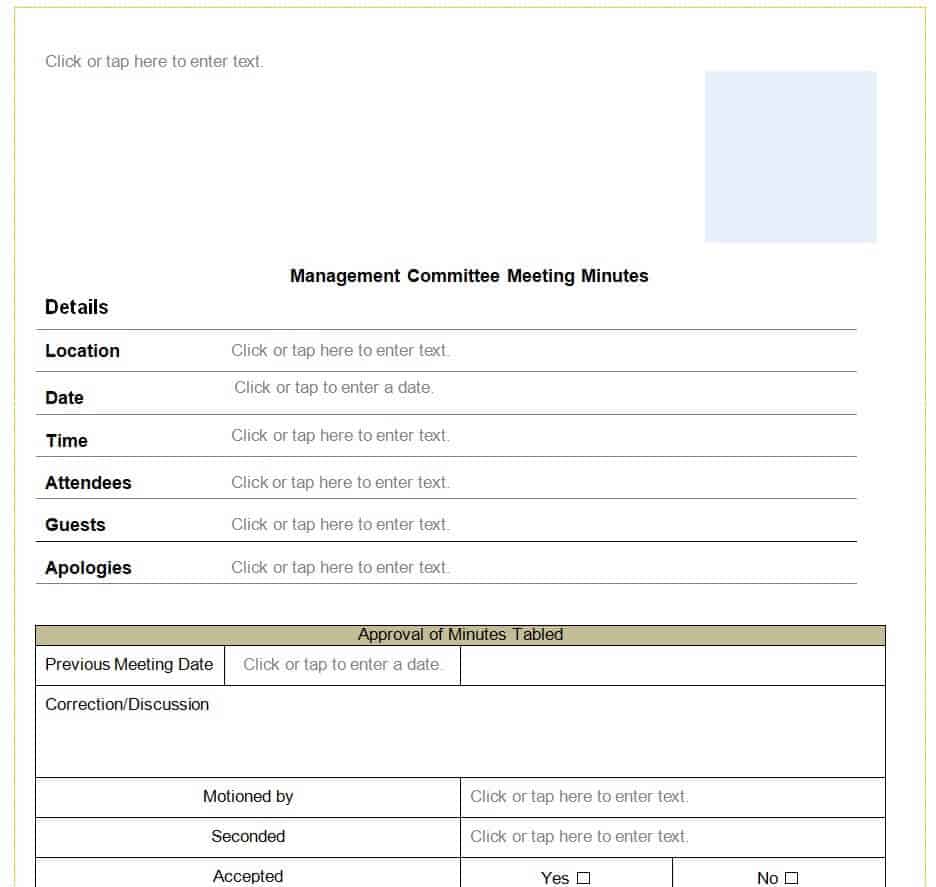
File Size: 150 KB
University’s Meeting Minutes Word Template
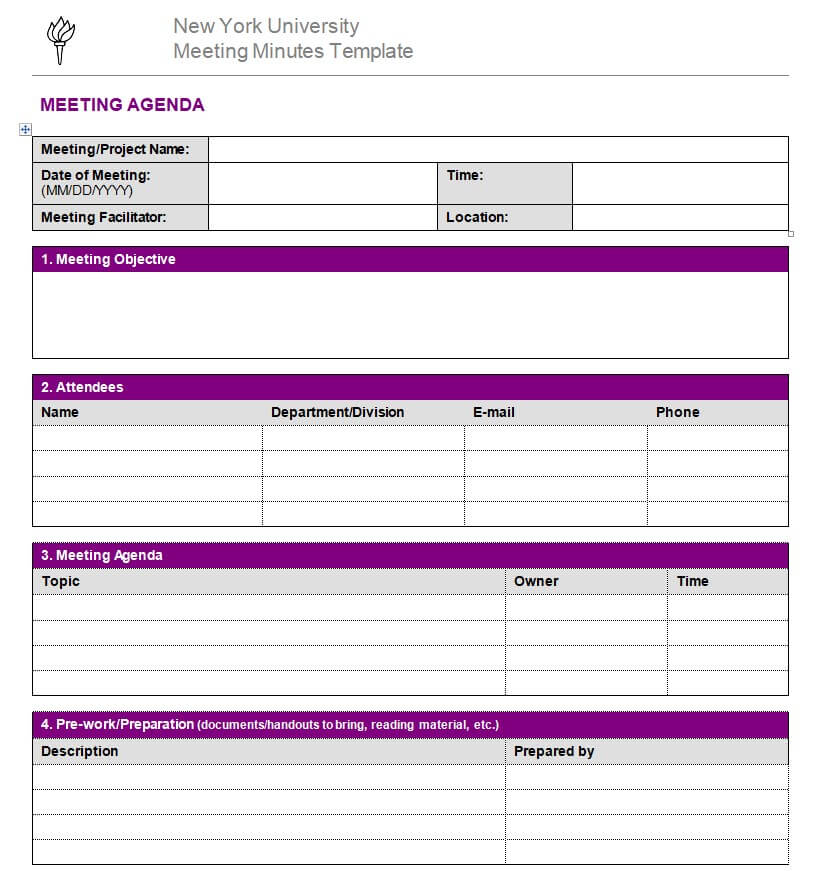
File Size: 15 KB
School’s Fillable Meeting Minutes Template
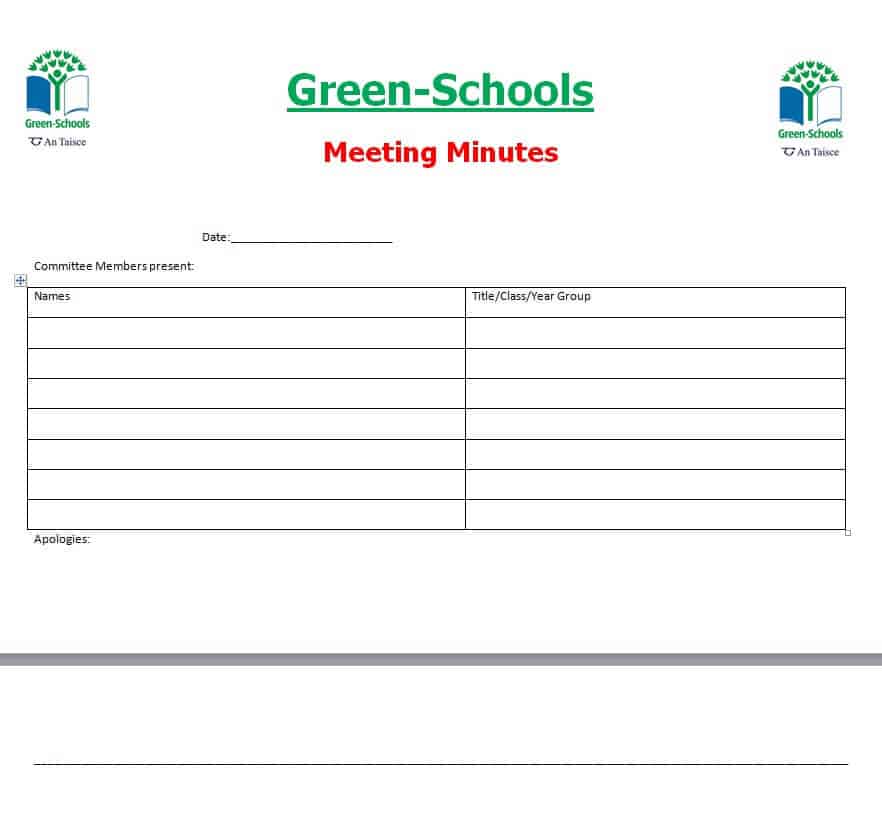
File Size: 482 KB
How to Record or Take Meeting Minutes Effectively?
The minutes of a meeting are a tangible official record of a meeting. It can be of great help to any kind of stakeholder in an organization. For example, a shareholder may request the minutes of a recently held Board meeting or a regulatory authority might ask to provide a copy of the minutes of an Annual General Meeting (AGM) for some compliance purposes.
So, being a secretary on a company’s board or anyone responsible for taking or recording the minutes of a meeting, you must know how to effectively record or take meeting minutes. For this, you can also use the meeting minutes templates given here on this page. However, if you want to know how to record minutes of a meeting in a professional way, then make sure to keep in mind the given below useful tips:
- Create an outline of the minutes of a meeting so that it becomes easy for you to record minutes effectively. For this purpose, a meeting minutes template can also be used.
- Then write down the nature of the meeting for which minutes are being recorded. For example, a Board of Directors’ meeting, an AGM, shareholders meeting, etc.
- Mention the name of the organization in full.
- Write the date, day, and location of the meeting.
- It is optional to write the timings in the minutes of a meeting. For example, one can write the commencement time of the meeting, its duration, and the finish time.
- Name of the person chairing the meeting and the name of the secretary.
- Briefly include the purpose of the meeting.
- Include any amendments or corrections related to any previous meeting(s).
- Add the name of all the participants as well as all the absentees.
- Add the agenda items and the issues that were highlighted or discussed in the meeting.
- Record all the decisions that were taken in the meeting.
- Record the resolutions that were taken, the voting results (in case of voting for any such resolution), and the final motion or decision i.e., whether or not the resolution is passed or not.
- It is quite important that the minutes are taken and recorded in real-time.
- Make sure to be brief and concise in your writing. The minutes must be drafted or recorded in such a way so that anyone easily understands the details or information provided in those minutes.
- Being the minutes taker of the meeting, make sure not to include:
- your opinion, judgment, or interpretation.
- all the discussion. Just write down what was the matter and what is the final decision.
- any motion or resolution that was simply withdrawn.
- any repeated information.
- Date and timing of the next meeting.
- Some spelling or grammatical mistakes can be avoided while recording the minutes of a meeting. However, it is allowed only to the extent where the message of the statement is not distorted.
Frequently Asked Questions
Who is responsible for writing meeting minutes?
Typically, a designated secretary, administrative assistant, or project administrator records meeting minutes. In informal team settings, the meeting chair may rotate note-taking responsibilities among team members.
Are meeting minutes legally binding?
Yes. For registered corporations, non-profit organizations, and public sector entities, approved board and general meeting minutes act as legally binding records that can be subpoenaed or audited by regulatory bodies.
What is the difference between an agenda and meeting minutes?
An agenda is a forward-looking document distributed before a meeting outlining topics to be discussed. Meeting minutes are a backward-looking document created during/after the session detailing what actually occurred, what decisions were made, and what actions were assigned.


![30+ Professional Weekly Status Report Templates [in PDF & WORD]](https://www.dailylifedocs.com/wp-content/uploads/2026/06/cfb38010-59f8-4c3f-ab17-d47065daeb74-150x150.jpg)