When evaluating major business decisions, simple pros and cons lists rarely provide enough depth. Whether launching a new product, entering a competitive market, or adjusting your organizational roadmap, you need a framework that evaluates both internal dynamics and external forces.
This is where a SWOT Analysis becomes essential.
To help you conduct thorough evaluations without spending hours building layouts from scratch, we have put together 16 free, fully editable Microsoft Word SWOT analysis templates. Below, you’ll find our quick guide on how to perform a SWOT analysis effectively, along with direct template downloads tailored for every business need.
What is a SWOT Analysis?
A SWOT Analysis is a structured framework used by management, business analysts, and marketers to identify key factors impacting a project, product, or enterprise. The acronym stands for:
- S – Strengths (Internal advantages)
- W – Weaknesses (Internal areas for improvement)
- O – Opportunities (External factors to leverage)
- T – Threats (External risks to mitigate)
By categorizing findings into this classic 2×2 matrix, organizations gain clear insights into where they excel and where risk management is required.
Core Components of an Effective SWOT Analysis
A successful SWOT evaluation requires separating controllable internal performance from uncontrollable external market forces.
                  INTERNAL FACTORS           EXTERNAL FACTORS
              +-----------------------+-----------------------+
  POSITIVE    |       STRENGTHS       |     OPPORTUNITIES     |
              +-----------------------+-----------------------+
  NEGATIVE    |      WEAKNESSES       |        THREATS        |
              +-----------------------+-----------------------+
1. Strengths (Internal & Controllable)
Strengths represent the positive tangible and intangible attributes your organization owns.
- Key Questions: What internal resources do you possess? What do you do better than competitors? Do you have strong brand equity or proprietary technology?
2. Weaknesses (Internal & Controllable)
Weaknesses are internal limitations that place your initiative at a competitive disadvantage.
- Key Questions: Where are your resource gaps? Which internal processes cause delays? What feedback or complaints do you regularly receive from clients?
3. Opportunities (External & Dynamic)
Opportunities are favorable market trends or external conditions that your company can capitalize on to drive growth.
- Key Questions: Are there emerging market gaps or shifting consumer habits? Have recent technology or regulatory changes opened up new service avenues?
4. Threats (External & Dynamic)
Threats encompass external factors that could jeopardize stability or profitability.
- Key Questions: What hurdles are competitors creating? Are supply chain bottlenecks or changing government policies likely to affect revenues?
Why Use Microsoft Word for SWOT Matrices?
While complex strategic planning software exists, Microsoft Word remains one of the most accessible tools for team collaboration. Utilizing pre-formatted Word templates offers distinct benefits:
No Learning Curve: Employees across departments can immediately fill out and edit formatted text boxes without specialized training.
Full Customizability: Easily adjust table margins, colors, and typography to fit corporate branding guidelines.
Instant Printing & Exporting: Save matrices directly as PDFs for board meetings, client decks, or executive briefings.
Example SWOT Analysis Template
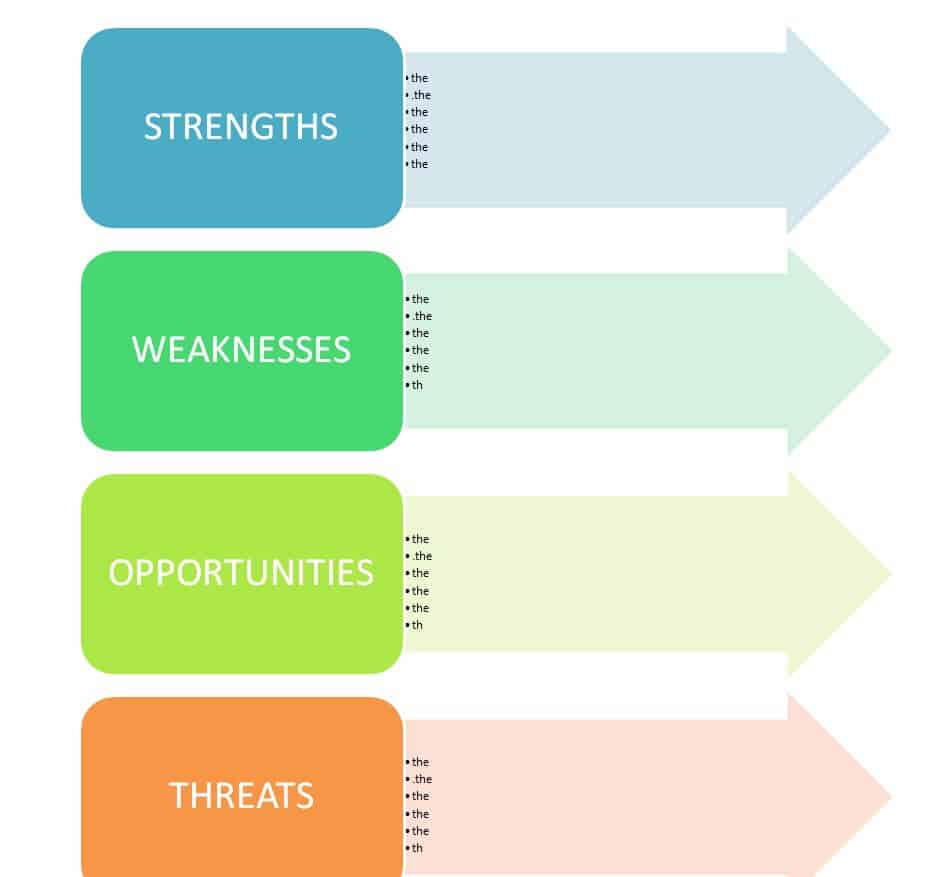
Overview & Visual Layout: This document features a clean, balanced four-quadrant matrix layout using distinct border colors to differentiate each category. Each quadrant contains bulleted text placeholders designed for quick bullet-point entries, accompanied by brief prompt headings to guide initial brainstorming sessions.
Practical Use Case: Best suited for high-level team workshops or quick executive summaries where a straightforward, readable matrix is needed without unnecessary design clutter.
File Size: 25 KB
Professional SWOT Analysis Template
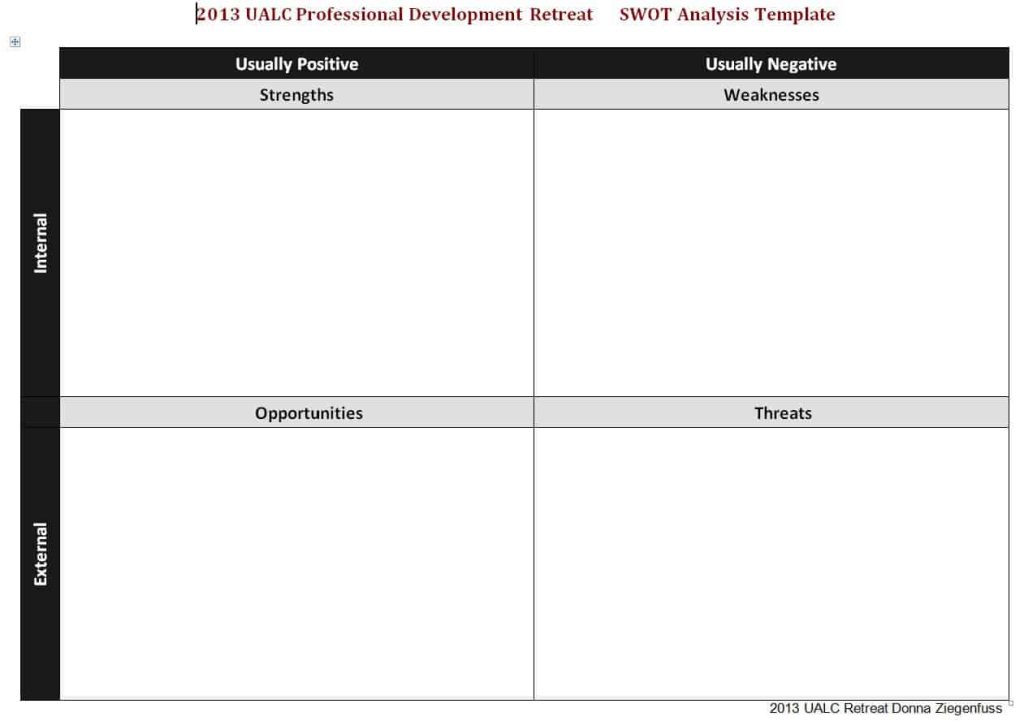
Styled with a modern header section and shaded table blocks, this template presents a corporate aesthetic. It uses dark accent bars across the top of each quadrant to create visual hierarchy and improve readability during presentations.
Practical Use Case: Ideal for formal business proposals, investor pitch decks, and corporate strategic evaluations that require a polished look.
File Size: 12 KB
Personal SWOT Analysis Template
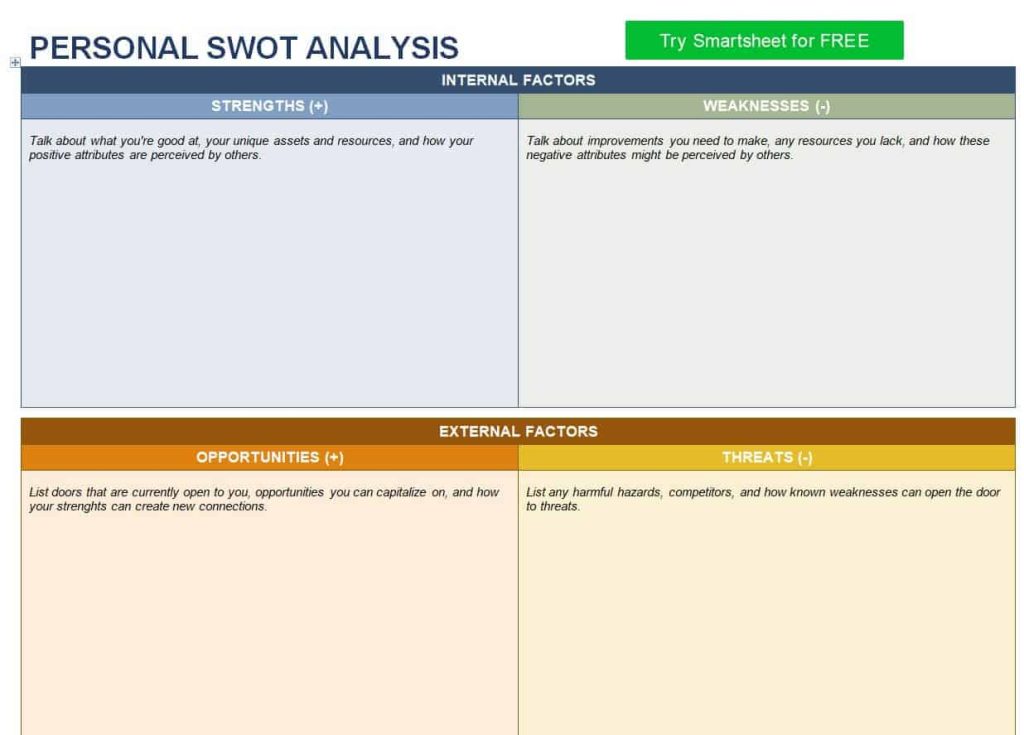
Formatted with tailored prompts focusing on skill sets, habits, and career goals, this single-page document uses warm color accents and larger text fields to accommodate personal reflection notes.
Practical Use Case: Perfect for individual professional development, performance reviews, career transition planning, or self-assessment exercises.
File Size: 18 KB
Business SWOT Analysis Template
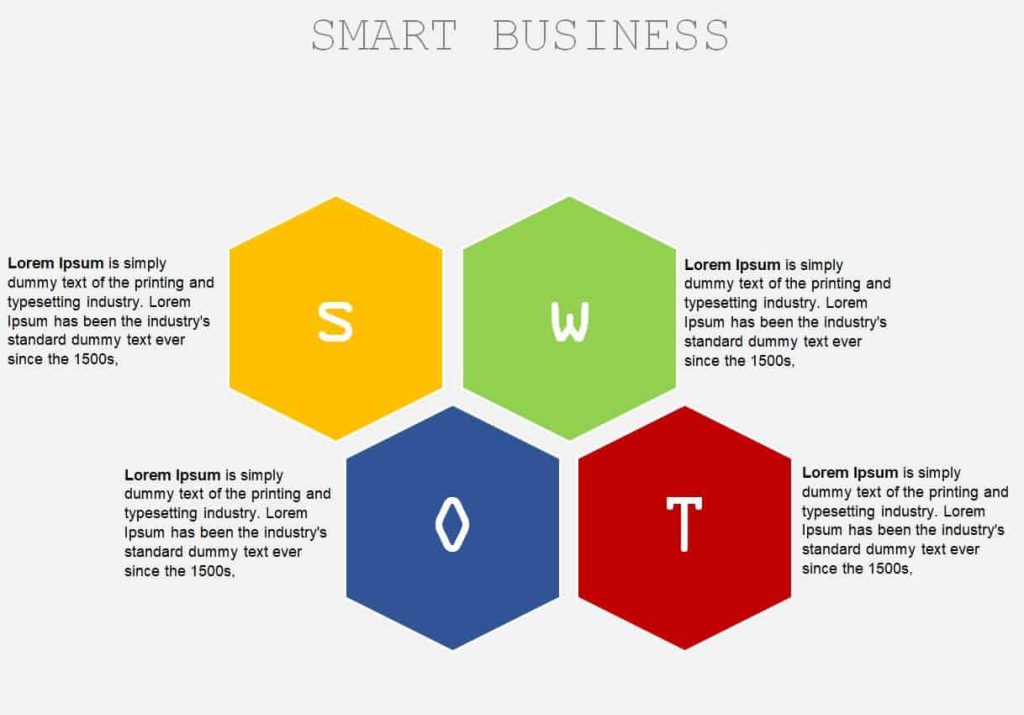
A multi-column structure featuring distinct sections for financial, operational, and market data inputs alongside the primary SWOT quadrant. It incorporates structured sub-headings to encourage granular details.
Practical Use Case: Excellent for established small-to-medium businesses conducting annual strategic reviews or evaluating expansion plans.
File Size: 27 KB
Sample SWOT Analysis Template
A minimalist design utilizing thin gridlines and standard system typography. The layout maximizes printable page space, ensuring that extensive detailed notes fit neatly onto a single page.
Practical Use Case: Great for students, academic research, or quick draft notes where straightforward readability is preferred over heavy formatting.
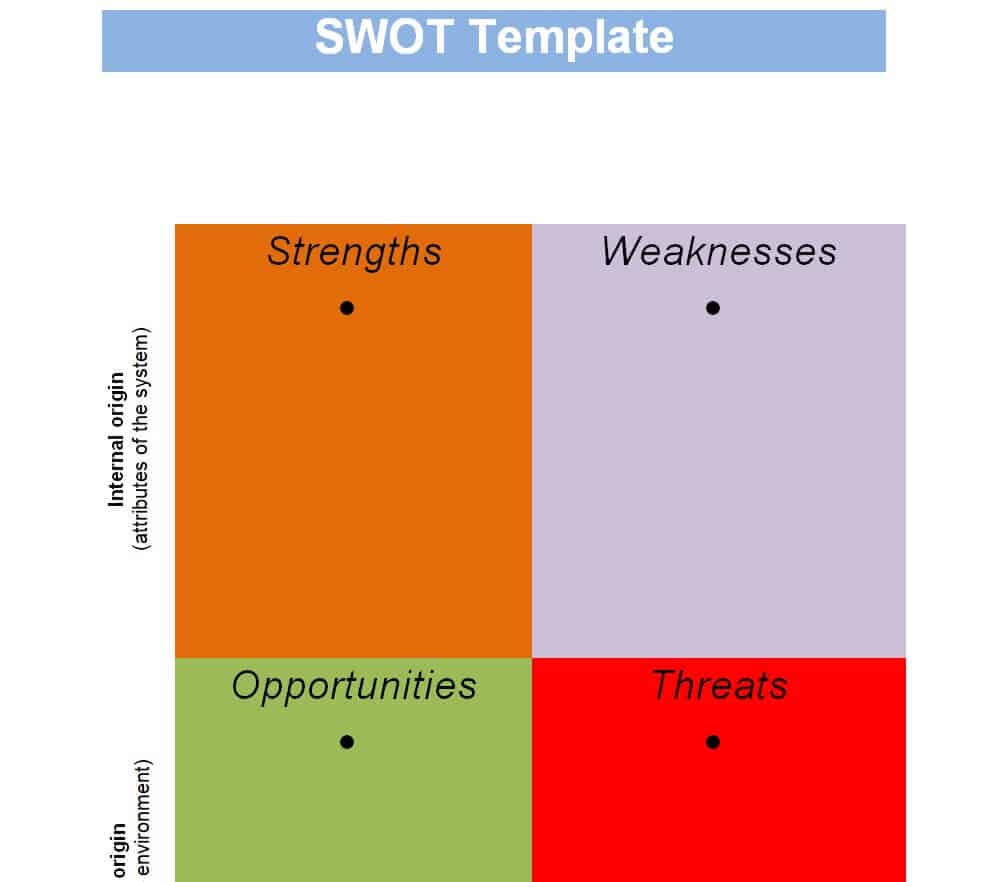
File Size: 16 KB
Detailed SWOT Analysis Template
This template expands beyond the traditional four-box matrix by adding dedicated action-planning rows beneath each quadrant. It includes specific fields to assign priority levels and outline follow-up initiatives.
Practical Use Case: Suited for project managers who need to translate raw SWOT observations directly into actionable project strategies and timelines.

File Size: 54 KB
Simple SWOT Analysis Template
Featuring a basic two-by-two table with default blue background fills for headers, this straightforward template provides ample room for text entries in each quadrant.
Practical Use Case: Ideal for quick departmental huddles or introductory business courses requiring a basic, no-nonsense matrix layout.
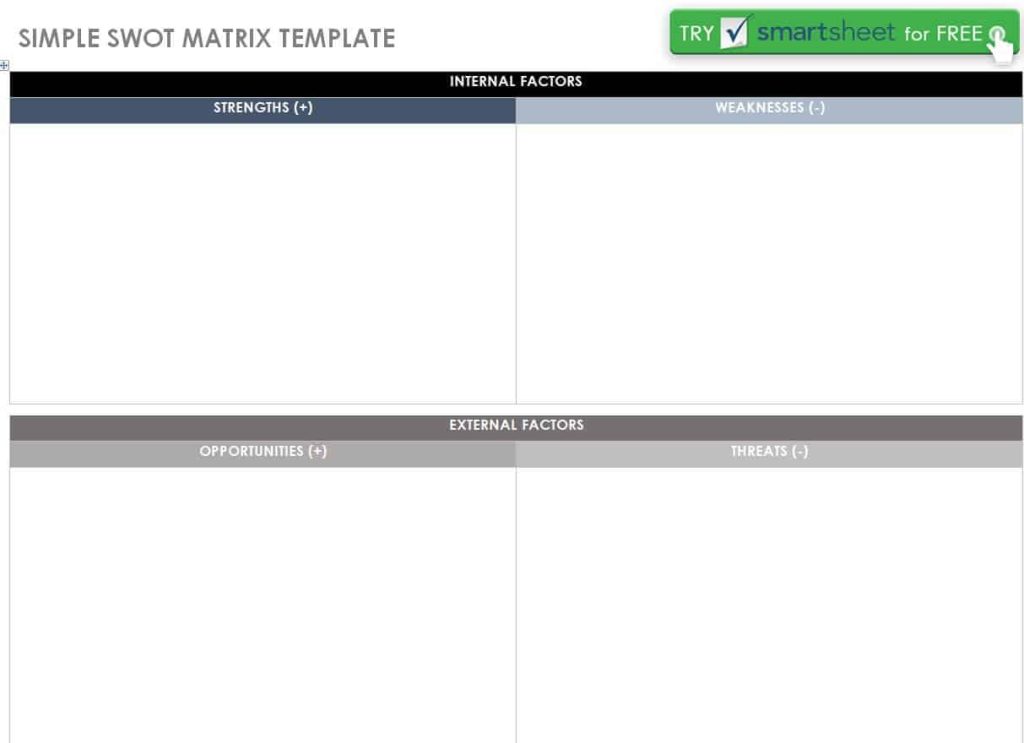
File Size: 36 KB
Pratical SWOT Analysis Template WORD
Designed with clear visual separation between internal factors (Strengths/Weaknesses) on the top row and external factors (Opportunities/Threats) on the bottom row, highlighted by background shading.
Practical Use Case: Useful when presenting strategic analyses to stakeholders, as it emphasizes the structural distinction between internal and external factors.
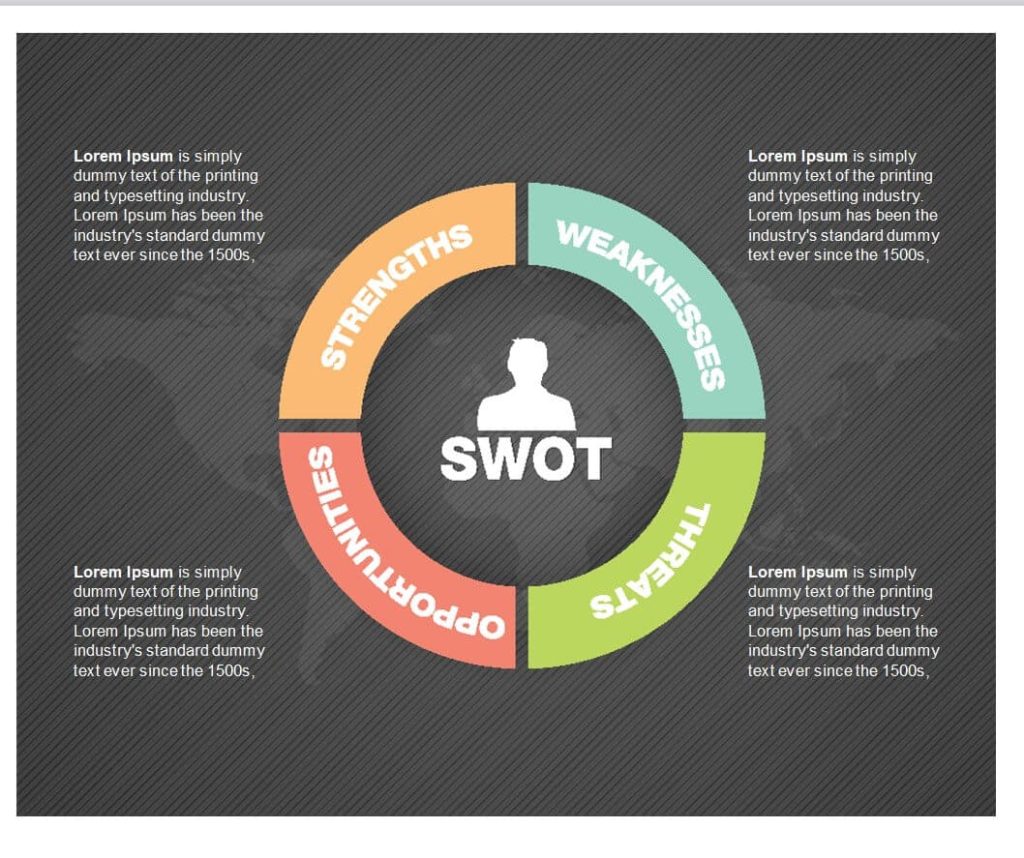
File Size: 133 KB
Free Editable SWOT Analysis Template
A versatile template featuring fillable text fields and fully customizable color blocks. The quadrant headers use clear typography with subtle vector icon placeholders.
Practical Use Case: Serves as a flexible base template for teams wanting to apply custom brand colors and icons for client-facing documentation.
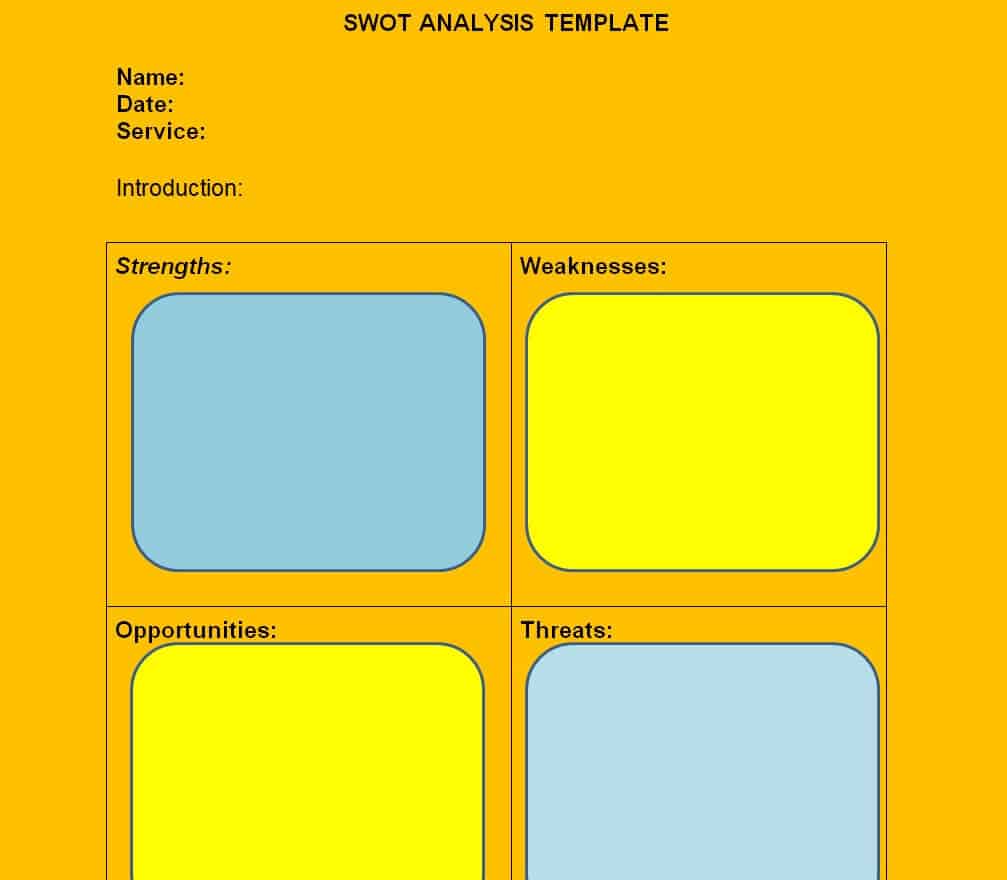
File Size: 18 KB
Components of a Perfect SWOT Analysis
As mentioned earlier, the SWOT analysis consists of Strengths, Weaknesses, Opportunities, and Threats. In every decision or project or task, these are some key factors that help you make strategic and effective decisions. If you manage to evaluate and analyze all these components in a proper way, then you will be able to make effective decisions for your company.
The first two components i.e., strengths and weaknesses are commonly internal factors and are mostly under the control of the organization. However, the other two components i.e., opportunities and threats are external factors and are mostly out of the control of the organization like the business opportunities, the market factors, or introduction of some new laws, etc.
In order to understand each component in a better way, some questions are given below for every single component. These questions are helpful in evaluating every single component of the SWOT analysis and thus the overall situation.
Strengths:
These are the powers and abilities that an organization has. As mentioned earlier, the strengths are an internal factor and are totally controllable by the entity. The following can be some important questions in order to assess your business’s strengths:
- What are the entity’s internal resources?
- In what areas the entity has expertise or does best?
- What are the company’s manufacturing capabilities?
- What are the advantages that your company has over its competitor(s)?
- Does the company have powerful research and development capacity?
- If there are some other positive features of your organization that add value?
Weaknesses:
Every entity or organization has weaknesses. Some of them can be overcome but there are some deficiencies or weaknesses that can be improved but can’t be completely removed. Below is a list of questions that can help you identify your business’s weaknesses:
- What are the areas or factors that place your business at a competitive disadvantage and can be enhanced or improved?
- What are some major deficiencies of your business?
- What areas need improvement if you want to compete with your strongest competitor?
- Is the location or the site of your business is having a negative impact on your business?
- Is your workforce capable enough to meet the challenges of competing with other businesses?
Opportunites:
The opportunities are external factors that are not under your control. However, these are external factors from which your business can take advantage and ultimately grow. Check the given below questions that you can use to evaluate the different opportunities available to your business:
- What are the opportunities or chances in the market of your business from which you can get the benefits?
- Do the people or customers have a positive opinion about your business?
- Are you aware of any recent changes in your business industry or market that might create new opportunities for your business?
- What else you can offer that your competitors are not offering yet? e.g., providing online services or offering discounts, etc.
- Are there new skills that your workforce can learn so as to have a competitive advantage?
Threats:
Threats are also external factors that every company or business has to face. Again, these are not under your control and you have to develop strategies so as to minimize such threats or risks. Following are some questions that you can use to analyze the threats or risks to your business:
- Are you aware of the threats that might put your business at risk?
- What are the factors or threats that can affect your marketing campaigns?
- What are your potential competitors?
- Are there any uncontrollable events, risks, factors, or challenges that might lead to a significant decrease in profits or revenues? e.g., change in government policies or laws.
- Are you and your workforce aware of any changes in trends, consumer behaviors, or purchasing behaviors?
- What are the areas or factors that place your business at a competitive disadvantage and can be enhanced or improved?
- What are some major deficiencies of your business?
- What areas need improvement if you want to compete with your strongest competitor?
- Is the location or the site of your business is having a negative impact on your business?
- Is your workforce capable enough to meet the challenges of competing with other businesses?
- Has the technology or work techniques you are using become obsolete or outdated?
More SWOT Analysis Templates
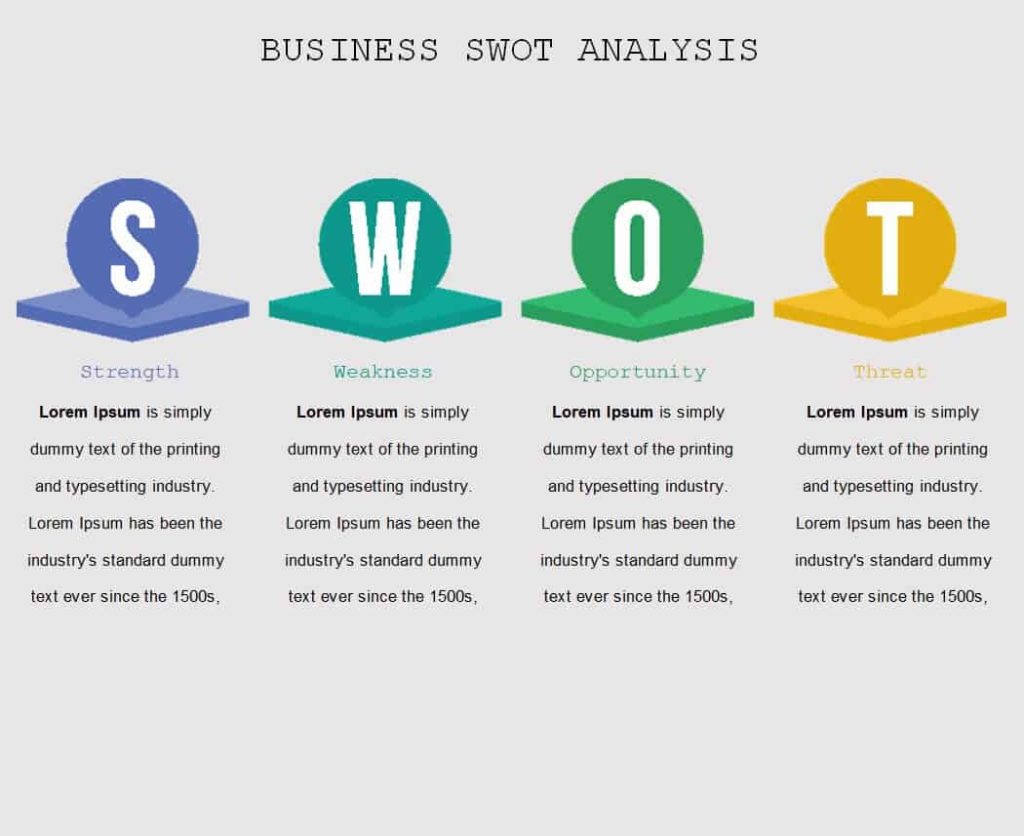
Typical Business SWOT Analysis WORD Template
Built with a traditional layout focused on core business functions like sales, marketing, and operations. It organizes content into structured bullet lists within each category box.
Practical Use Case: Standard choice for departmental managers preparing routine quarterly reports or divisional goal-setting sessions.
File Size: 24 KB
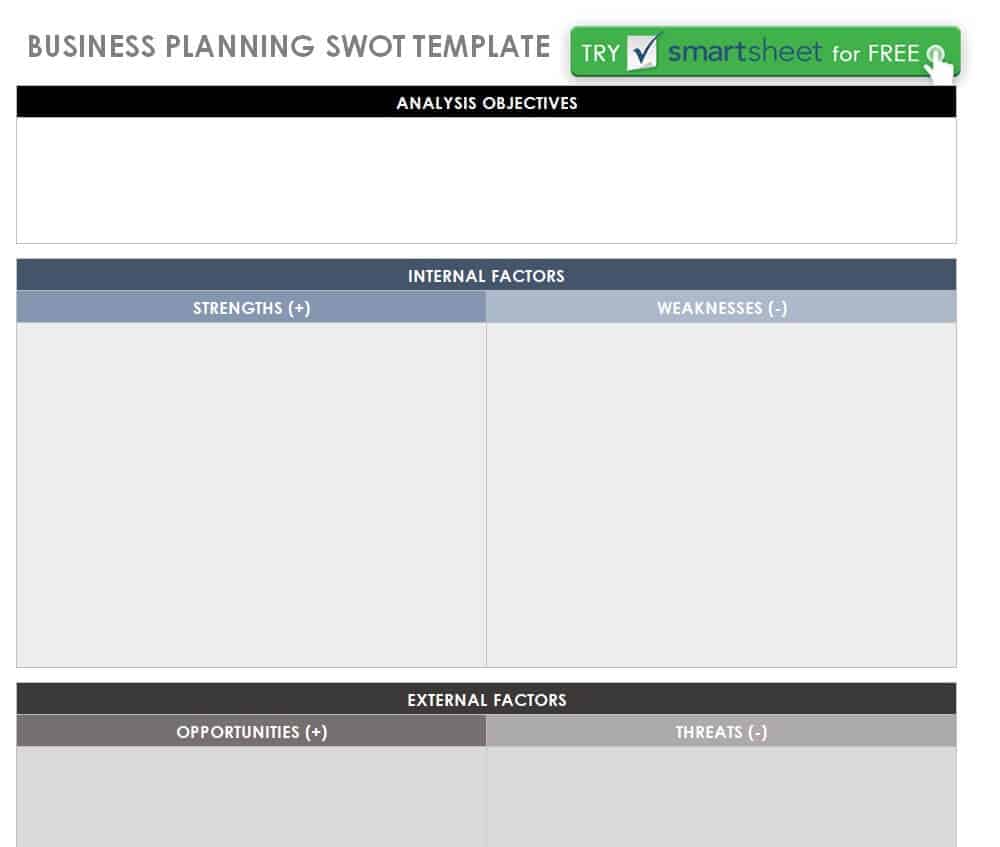
Business Planning SWOT Template
Integrates a strategic planning section alongside the main matrix, offering fields for vision statements, goal alignment, and key performance indicators (KPIs).
Practical Use Case: Designed for startup founders and business planners building out comprehensive formal business plans or funding applications.
File Size: 36 KB
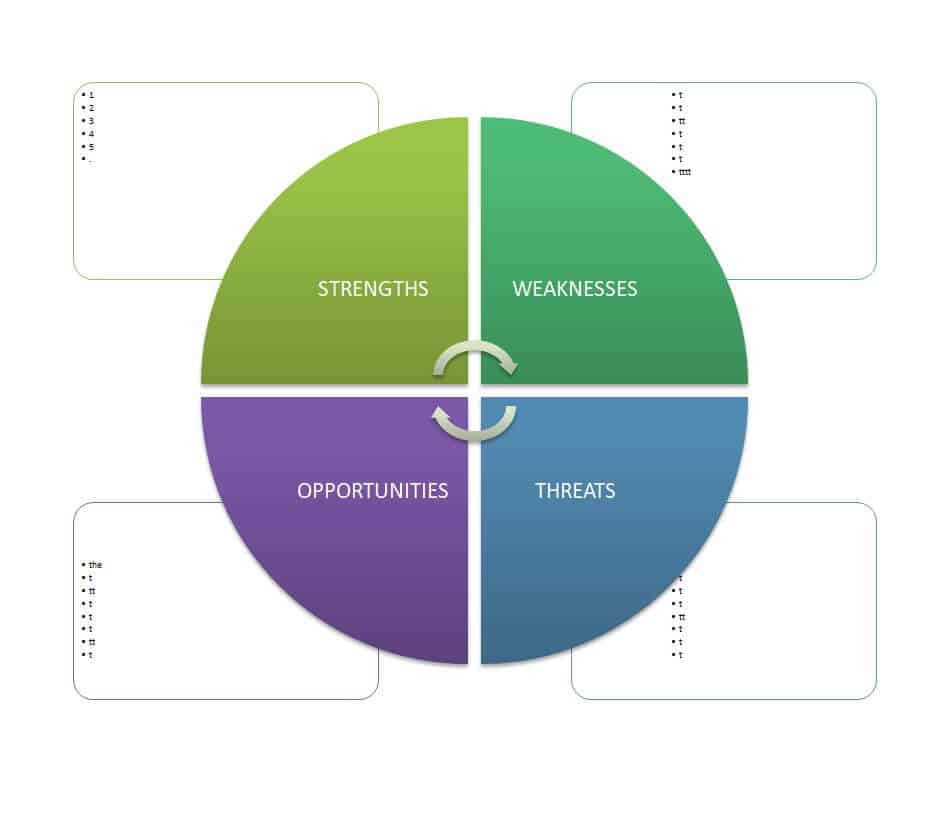
Printable SWOT Analysis Template Online
Formatted specifically for standard printing (US Letter / A4) with high-contrast monochrome borders and optimized margins to avoid print clipping.
Practical Use Case: Best for physical distribution during in-person strategy meetings, workshops, or group brainstorming sessions.
File Size: 30 KB
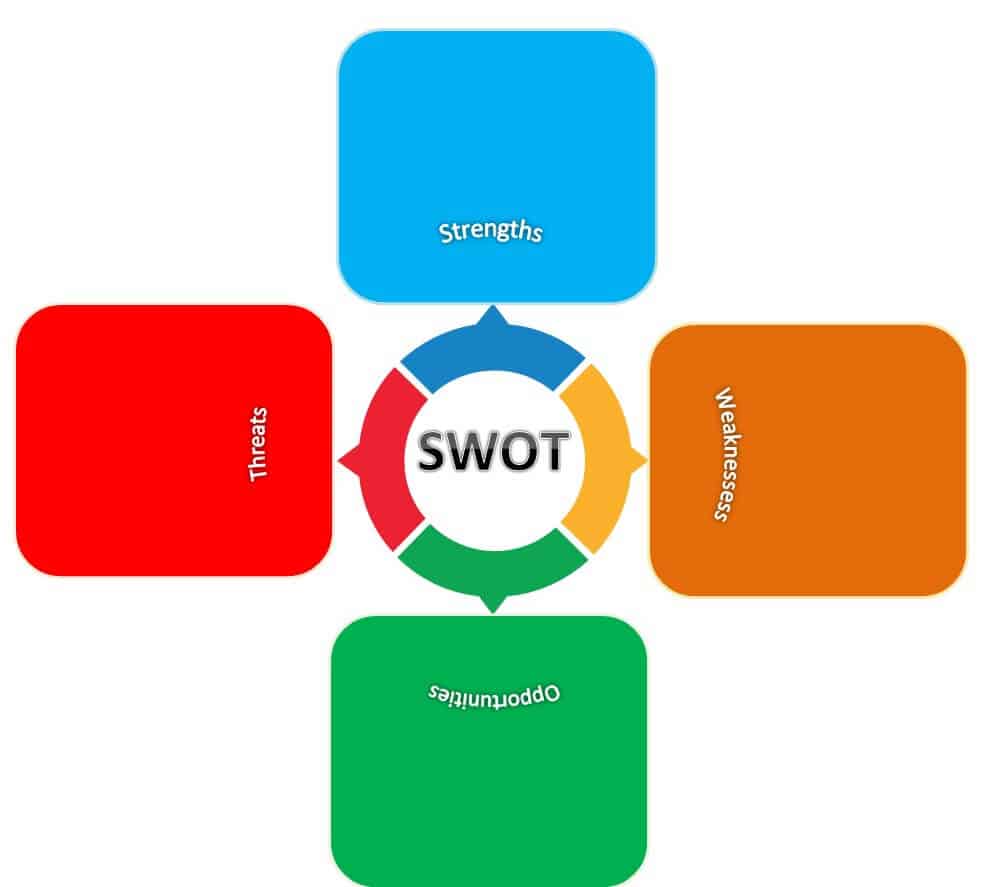
Catchy SWOT Analysis Template in DOC Format
Incorporates modern graphic elements, distinct color palettes, and stylized header bars to present data dynamically.
Practical Use Case: Recommended for creative agencies, marketing teams, or startups presenting strategic concepts to external clients.
File Size: 33 KB
Project SWOT Analysis Template
Features specialized prompts focusing on project scope, deadlines, budget constraints, and technical feasibility alongside the traditional SWOT matrix.
Practical Use Case: Tailored for IT, construction, or product development teams evaluating project viability before kick-off.
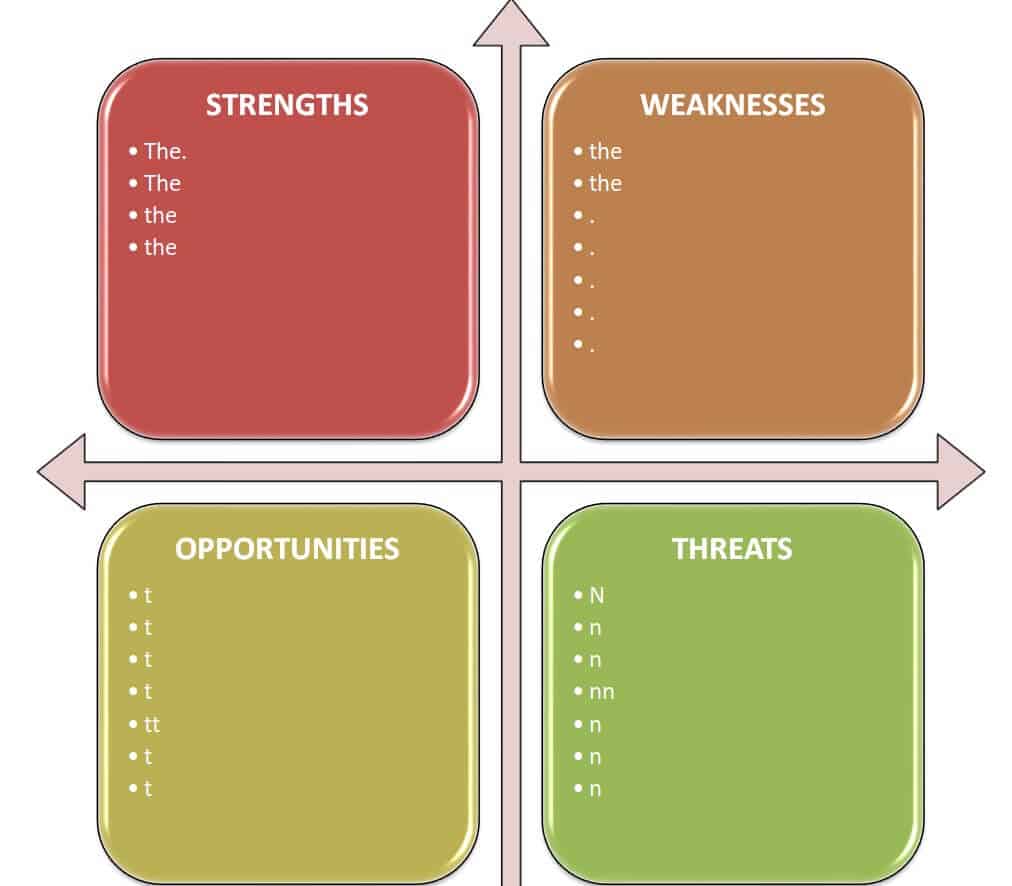
File Size: 23 KB
Editable SWOT Analysis Template with Summary
Combines a 4-quadrant matrix on the top half of the page with a dedicated executive summary and key takeaways text box across the bottom half.
Practical Use Case: Best for delivering briefings to C-level executives who require a high-level overview alongside the complete analysis.
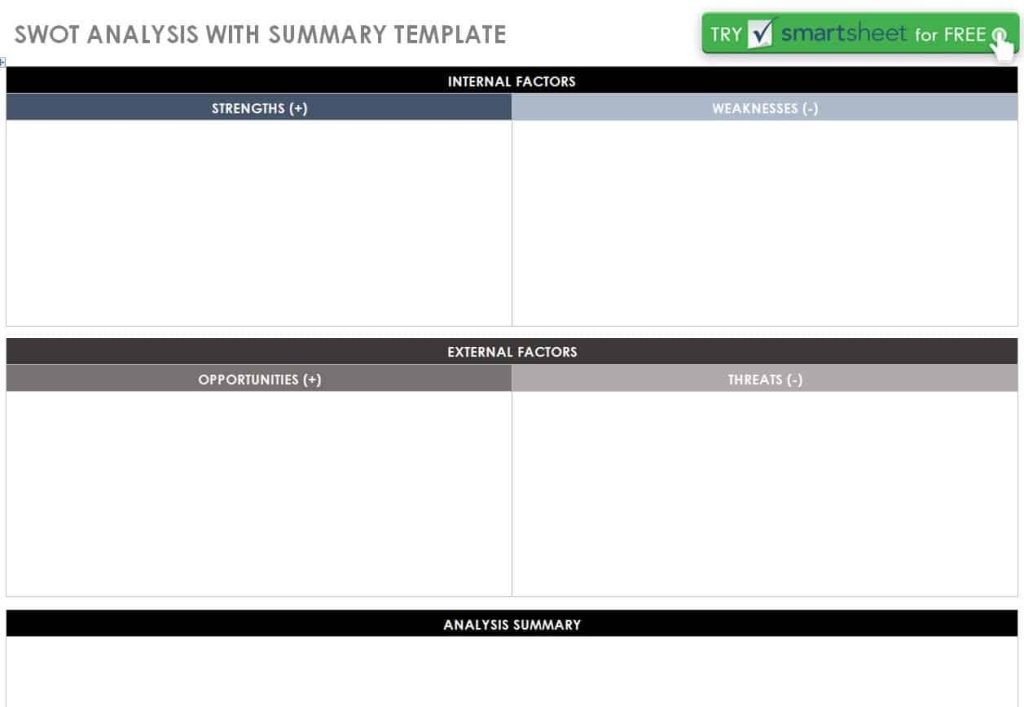
File Size: 37 KB
Project SWOT Analysis Template
A macro-focused matrix designed for large enterprises, with categorized sub-sections for culture, supply chain, legal compliance, and market share.
Practical Use Case: Intended for enterprise-level strategic evaluations, organizational restructuring, or non-profit board audits.
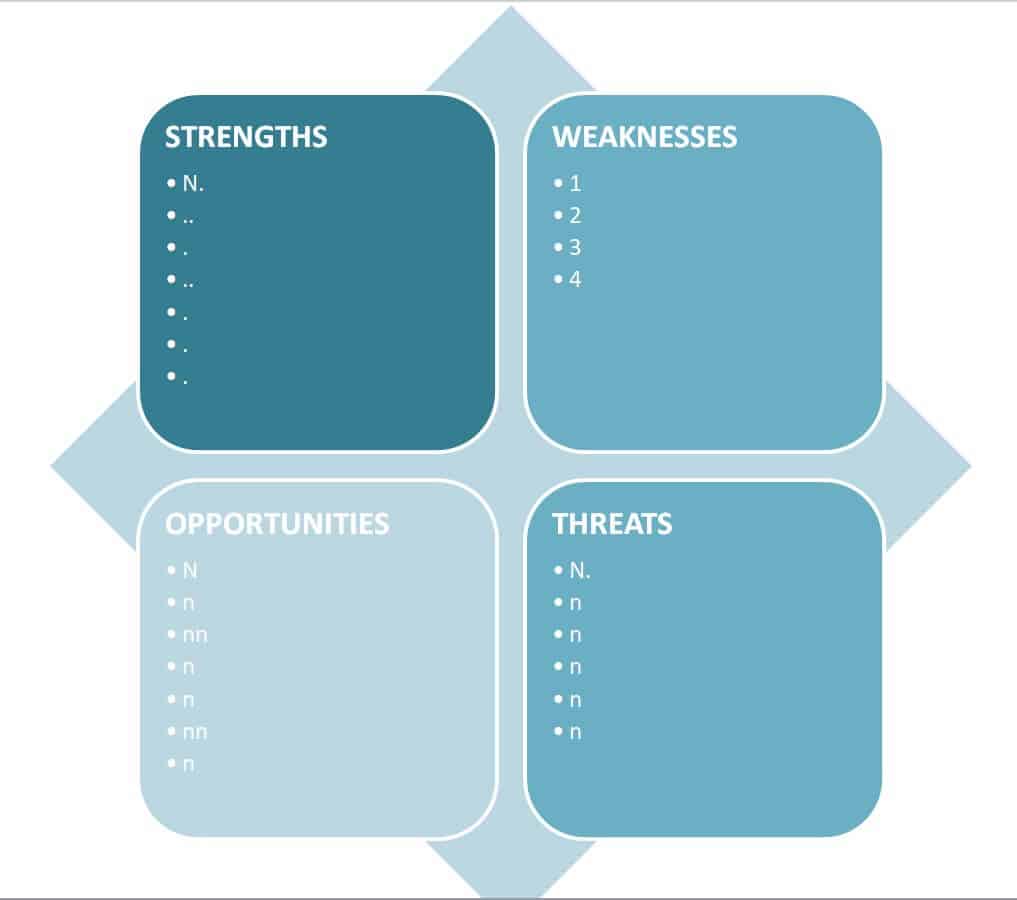
File Size: 23 KB
Organization’s SWOT Analysis Template
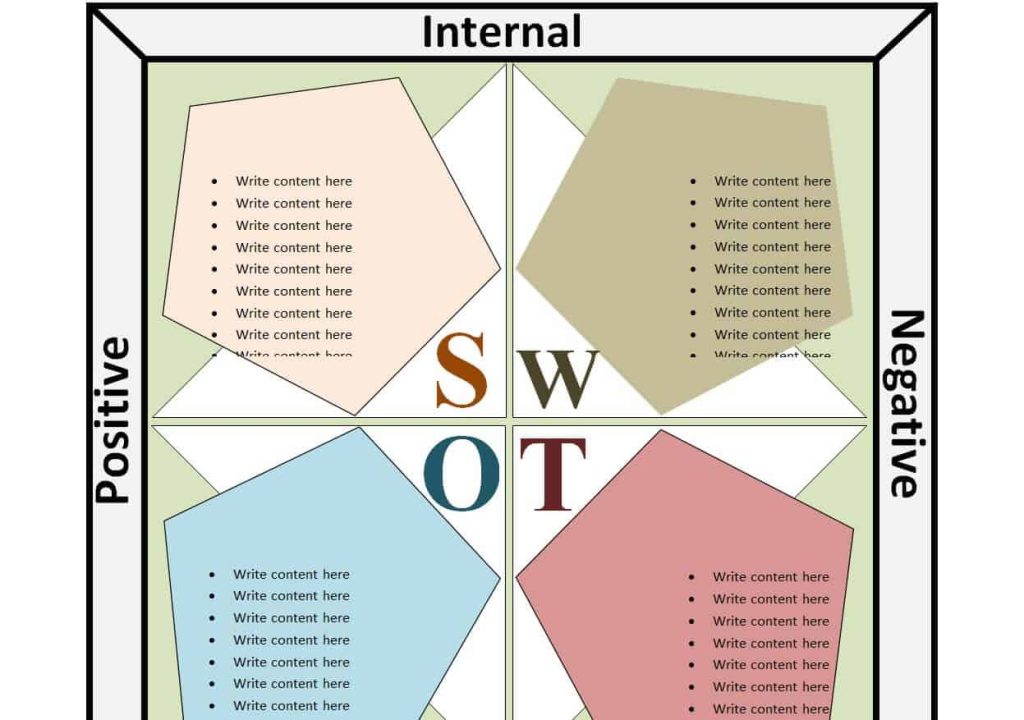
File Size: 44 KB
Frequently Asked Questions (FAQ)
What is the difference between internal and external factors in a SWOT analysis?
Internal factors (Strengths and Weaknesses) are variables under your direct control, such as team expertise, technology, intellectual property, or budget constraints. External factors (Opportunities and Threats) stem from the broader market environment—such as economic trends, competitor actions, or legal regulations—and cannot be directly controlled.
How often should a business perform a SWOT analysis?
Businesses should conduct a SWOT analysis at least once a year during annual strategic planning sessions. Additionally, it is recommended to perform a new analysis prior to major business milestones, such as launching a new product, entering a new geographic market, or undergoing corporate restructuring.
Can I edit these SWOT analysis templates in Google Docs?
Yes. These Microsoft Word (.docx) templates can be uploaded directly to Google Drive and opened in Google Docs. While layout and fonts convert cleanly, you may need to adjust minor formatting alignments after opening.
How long should a completed SWOT analysis document be?
For most strategic meetings, a concise 1-page 4-quadrant matrix is ideal. For formal business plans or investor presentations, a 2-to-3-page document that pairs the matrix with an executive summary and detailed action plan works best.

![18+ Practical Proforma Invoice Templates [WORD, EXCEL]](https://www.dailylifedocs.com/wp-content/uploads/2026/08/ac24e4f3-1393-47f1-bcb4-46459cfeff55-150x150.jpg)