Keeping your pet’s health information in one place makes vet visits easier and helps you never miss a vaccination or medication. On this page you can download 3 free pet health record templates, including a pet health log template, a printable pet health record sheet and an editable pet health record in Word. Each template lets dog, cat and other pet owners record vaccinations, vet visits, medications, weight, allergies, diet and emergency contacts.
Pet Health Record Basics
A pet health record (sometimes called a pet medical record or pet vaccination record) is a simple document where you track your pet’s health, habits and care over time. Good records help you notice health problems early, so your pet can get the right treatment as soon as possible. Keeping pets healthy needs regular care, and a few minutes spent updating the record after each meal change, treatment or vet visit pays off.
Faster, better vet visits: When you visit a veterinarian, you will be asked about your pet’s history, symptoms, diet and past treatments. A regularly updated pet health record sheet answers those questions instantly, helping the vet identify the problem and start treatment quickly.
Stay informed: A well maintained record keeps you up to date on vaccination due dates, flea, tick and worm treatments, weight changes and ongoing medications, and gives your vet the information needed to suggest the most suitable care.
Easy to create: You do not need to buy a pet health book. Download a free pet health record template below, add your pet’s details and keep it on your computer or print it for quick access.
How to use these templates: Download a pet health record template and start by filling in your pet’s name, breed, date of birth, microchip number and your vet’s contact details. Add every vaccination with the date given and the next due date, then record vet visits, treatments, medications, weight checks and any allergies or health conditions. Update the record after each appointment, keep a printed copy with your pet’s travel bag or carrier, and share it with pet sitters, boarding kennels or a new vet whenever needed.
Tip: Take a photo of each vaccination certificate and lab result and save it with your digital pet health record, so you always have proof of vaccination for travel, grooming or boarding.
Download Pet Health Record Templates:

Why Keep a Pet Health Record?
A pet health record is a simple document where you keep all the important medical and care information about your dog, cat, rabbit, bird or other pet. Vets often see many animals each day, and pets may visit more than one clinic over their lifetime, so having your own organized record makes every appointment easier. It helps you remember vaccination due dates, track weight and medication, share accurate information in an emergency, and provide proof of vaccinations to groomers, boarding kennels, pet sitters, trainers and travel authorities.
A pet health record is especially useful for new pet owners, families with several pets, owners of older pets with ongoing conditions, breeders and foster carers. It also gives you peace of mind when someone else is looking after your pet.
What to Include in a Pet Health Record
Pet profile: Name, species, breed, sex, date of birth or adoption, color and markings, microchip number and a recent photo.
Owner and emergency contacts: Your name, phone and address, plus a backup contact who can make decisions if you are unavailable.
Veterinarian details: Name, clinic, phone number and the nearest emergency animal hospital.
Vaccination history: Vaccine name, date given, batch number if available, vet name and next due date.
Parasite prevention: Dates and products used for flea, tick and worm treatments.
Vet visits and treatments: Date, reason for visit, diagnosis, tests, procedures and follow-up instructions.
Medications: Name, dose, frequency, start and end dates, exactly as prescribed by your vet.
Weight and growth: Regular weight records help you spot weight gain or loss early.
Allergies and conditions: Known allergies, food sensitivities and long-term health conditions.
Diet and care notes: Food brand and amount, feeding schedule, grooming and exercise routine.
Templates in This Collection
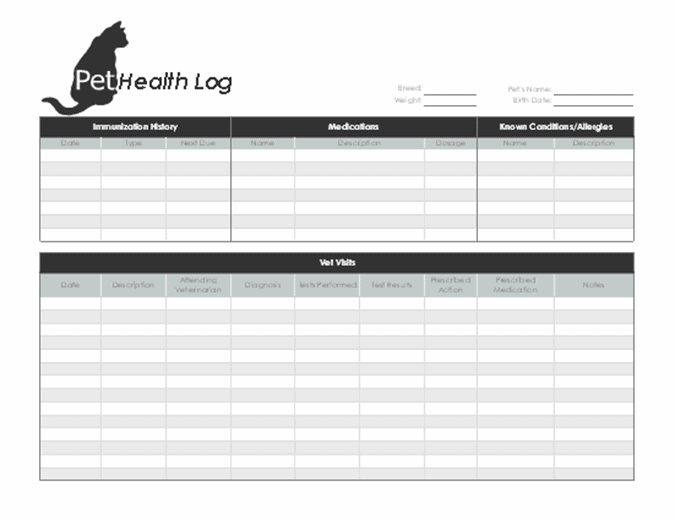
Pet health log template: An editable log for recording vet visits, treatments and notes over time.
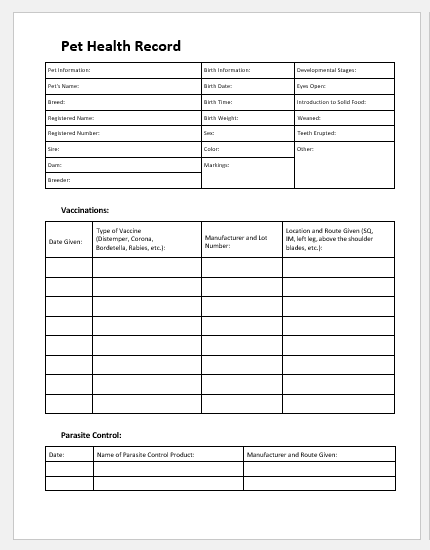
Pet health record sheet: A printable sheet with sections for vaccinations, medications and vet details.
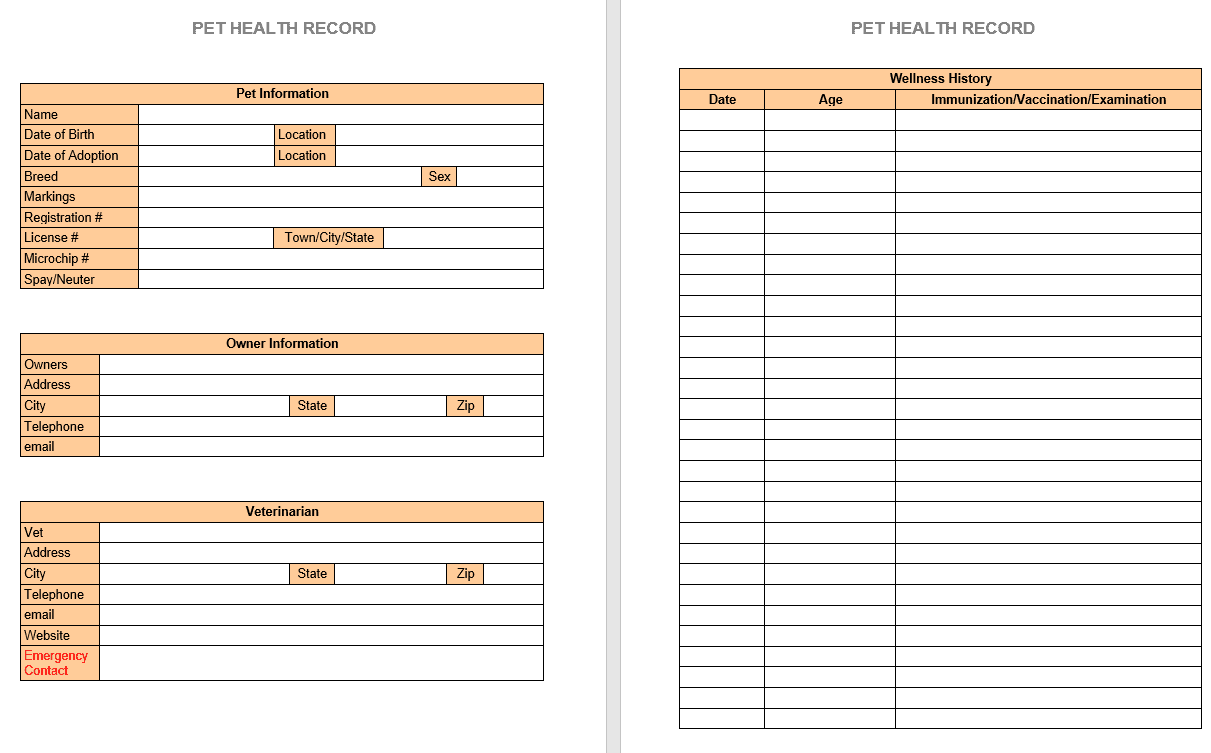
Pet health record in Word: A fully editable document that you can update on your computer and print when needed.
How to Use Your Pet Health Record
Download the template that suits you, fill in your pet’s profile and contacts, and add past vaccinations and treatments from your vet’s records. Take the record to every vet appointment and update it before you leave. Set reminders for upcoming vaccinations and parasite treatments. Keep a printed copy in a folder with your pet’s documents and a digital copy on your phone so it is always available. If you have several pets, use a separate record for each one. You can track daily feeding, walks or symptoms in a log book or activity log, and use a daily checklist for care routines shared by family members.
Pet Health Tips
Schedule regular wellness checkups, usually at least once a year and more often for puppies, kittens and senior pets. Keep vaccinations and parasite prevention up to date as recommended by your vet. Maintain a healthy weight with the right amount of food and exercise, and brush your pet’s teeth if your vet advises it. Watch for changes in appetite, energy, behavior or toilet habits and contact your vet if you notice anything unusual. Always follow your veterinarian’s advice; a health record is an organizing tool and does not replace professional care. Include your pet in your family emergency plan with a copy of their health record, food and medication.
Traveling or Boarding With Your Pet
Many boarding kennels, pet hotels, groomers and airlines ask for proof of current vaccinations. Having an up-to-date pet health record ready saves time and helps avoid last-minute vet visits. For international travel, check the destination country’s requirements well in advance, as some need specific vaccinations, microchips or health certificates issued by an approved vet.
Pet Health Records for Different Pets
Dogs: Record core vaccinations, kennel cough or other vaccines your vet recommends, heartworm, flea and tick prevention, deworming, dental care, weight and any behavior notes.
Cats: Track vaccinations, flea and worm treatments, spay or neuter date, weight, dental checks and indoor or outdoor lifestyle, which can affect the care your vet recommends.
Puppies and kittens: Young animals need a series of vaccinations and treatments in their first months. Record each dose carefully and note the date of the next appointment.
Senior pets: Older pets often need more frequent checkups, blood tests and long-term medications. Keep detailed notes on appetite, mobility, weight and any changes in behavior.
Small pets and birds: Rabbits, guinea pigs, ferrets and birds also benefit from health records. Note diet, housing, nail and beak care, and visits to a vet experienced with exotic animals.
Paper vs Digital Pet Health Records
A printed record is easy to grab in an emergency and works without a phone or internet connection. A digital record in Word or Excel is easy to update, back up and share with family members, pet sitters or a new vet. Many owners keep both: a digital master file they update after each appointment, and a printed copy stored with the pet’s carrier, leash or travel bag.
Preparing for a vet visit: Before each appointment, review your pet’s health record and write down any questions or changes you have noticed, such as appetite, weight, energy, coughing or unusual behavior. Bring the record with you so the vet can see past treatments at a glance. Afterwards, update the record straight away with the diagnosis, treatment, medications and the date of the next visit, so nothing is forgotten.
Frequently Asked Questions
What is a pet health record?
It is a document that keeps your pet’s medical information in one place, including vaccinations, vet visits, medications, weight and allergies.
Why do I need a pet health record?
It helps you track vaccinations and treatments, share accurate information with vets and caregivers, and act quickly in an emergency.
What vaccinations should I record?
Record every vaccine your vet gives, along with the date and next due date. Your vet can advise which vaccines your pet needs.
Can I use one template for several pets?
It is best to keep a separate record for each pet so information does not get mixed up.
Can I share the record with a pet sitter?
Yes. Give your pet sitter a copy with emergency contacts, vet details, medications and feeding instructions.
Are these pet health record templates free?
Yes. All 3 pet health record templates on this page are free to download and print.
Conclusion
A complete pet health record is one of the simplest ways to look after your pet’s wellbeing. Download a free pet health record template from this page, fill in your pet’s details and keep it updated after every vet visit.