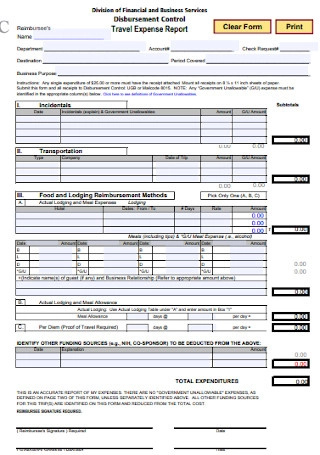
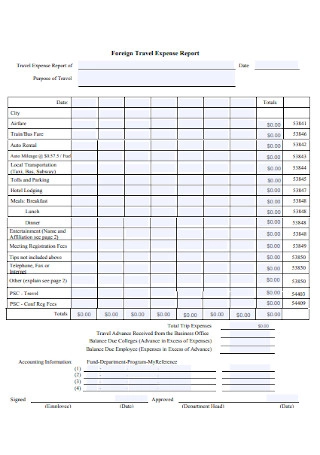
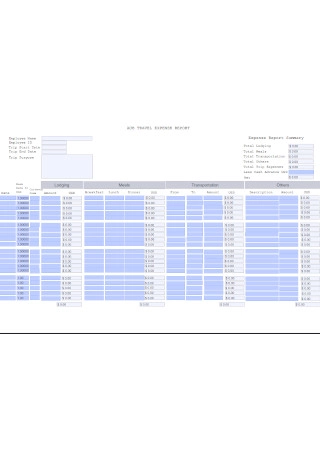
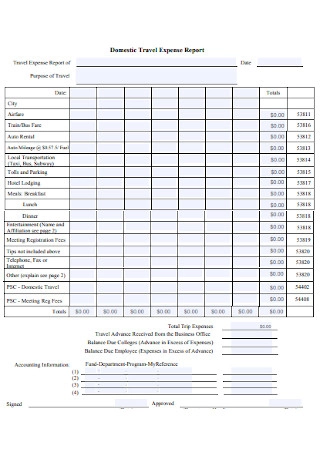
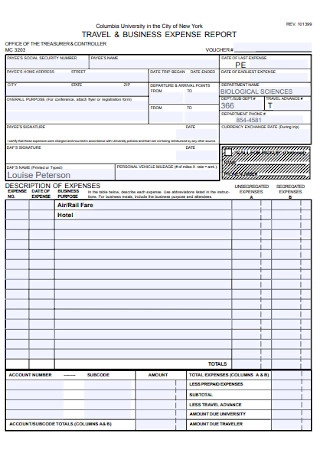
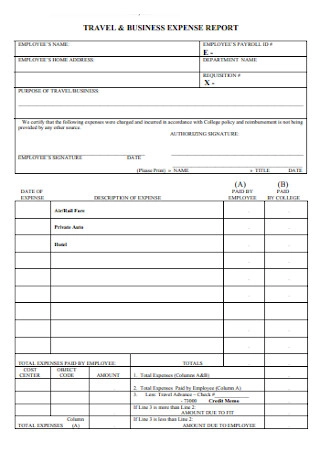
Getting reimbursed for a business trip is much faster when every cost is recorded clearly. On this page you can download 6 free travel expense report templates, including a standard travel expense report, a foreign travel expense report, a domestic travel expense report, a sample travel expense report and travel and business expense report templates. Each template lets you list airfare, hotel, meals, taxis, mileage and other costs with dates, receipts and totals, so employees, managers and accounts teams can process travel claims without delays.
Travel Expense Report Basics
A travel expense report is a document employees use to record the costs they paid during a business trip so the company can reimburse them. Many employers ask staff to pay travel expenses with personal money and claim them back later, so keeping an organized record of every cost is essential to get the exact amount repaid.
How it is used: Employees submit the report to their manager or accountant along with receipts. Reports can be prepared for each trip or for a whole month of business travel. If you use your own car, the template can also track mileage covered and fuel costs for reimbursement.
Typical expenses to include: Air and train tickets, hotel accommodation, meals, taxis and local transport, car rental, parking, fuel and mileage, conference fees and other business costs, each with a date, description and amount.
Not just for business: Individuals can also use a travel budget sheet to track the cost of a personal or family vacation. Whatever the purpose, a ready-made travel expense report template saves time and effort, and all the templates below are easy to edit and print.
How to use these templates: Download a travel expense report template and enter your name, department, trip purpose and travel dates. Record each expense on the day it happens with the date, category, description and amount, and keep the receipt. At the end of the trip, total the expenses, subtract any cash advance, attach the receipts and submit the report to your manager for approval and reimbursement.
Tip: Photograph every receipt as soon as you get it and save the images with your expense report, so a lost paper receipt never delays your reimbursement.
Download Travel Expense Report Templates:

What Is a Travel Expense Report?
A travel expense report is a document employees complete after a business trip to list every cost they paid, so the company can check the expenses and reimburse them. It usually covers transport, accommodation, meals, conference fees, local travel and other business costs, with dates, amounts, payment methods and supporting receipts. Managers approve the report, and the finance or accounts team uses it to process the reimbursement and record the costs correctly in the company’s books.
For businesses, travel expense reports are an important control tool. They help keep travel spending within policy and budget, provide evidence for tax and audit purposes, and show how much each department, project or client is costing in travel. For employees, a clear report means faster reimbursement and fewer questions.
What to Include in a Travel Expense Report
Employee and trip details: Name, employee ID, department, manager, trip purpose, destination and travel dates.
Transportation: Airfare, train or bus tickets, car rental, fuel, tolls, parking, taxis and ride-share costs.
Mileage: If you used your own vehicle, record the start and end location, distance traveled and the company’s mileage rate.
Accommodation: Hotel or short-stay rental costs per night, plus taxes and resort fees.
Meals and per diem: Breakfast, lunch and dinner costs, or the daily allowance if your company uses a per diem system.
Business expenses: Conference registration, client entertainment, internet, phone, printing and supplies.
Currency details: For foreign trips, the original currency, exchange rate and converted amount.
Advances and totals: Any cash advance received, the total expenses and the net amount owed to the employee or company.
Receipts and approvals: A list of attached receipts and signatures from the employee and approving manager.
Types of Travel Expense Report Templates on This Page
Standard travel expense report: A general layout for most business trips, with daily columns for each expense category.
Foreign travel expense report: Includes currency and exchange-rate fields for international trips.
Domestic travel expense report: A simpler version for local and national travel.
Sample travel expense report: A filled-in example that shows how a completed report should look.
Travel and business expense report templates: Combine travel costs with other business expenses such as client meals and supplies, useful for sales teams and consultants.
How to Complete a Travel Expense Report
Step 1 – Collect receipts during the trip: Keep every receipt, or take photos of them immediately so nothing is lost.
Step 2 – Enter trip details: Fill in your name, department, trip purpose, destination and dates at the top of the template.
Step 3 – Record each expense: Enter the date, category, description and amount of each cost. Use one line per receipt.
Step 4 – Add mileage and per diem: Calculate mileage using your company rate and add per diem amounts if applicable.
Step 5 – Subtract advances: Deduct any cash advance or company card payments to calculate the amount to reimburse.
Step 6 – Attach receipts and submit: Attach receipts in the same order as the report, sign it and submit it to your manager within the deadline set by your policy.
Tips for Managers and Finance Teams
Publish a clear travel policy that explains daily limits, approved booking methods and which expenses are not reimbursable. Ask employees to submit reports within a set number of days after the trip. Review reports for duplicate receipts, personal expenses and costs above policy limits. Summarize approved travel spending each month in an expense report or summary report, and record reimbursements with a payment voucher. Including expected travel costs in your cash flow forecast helps avoid surprises.
Personal Travel Budgets
These templates are not only for businesses. Families and individuals can use a travel expense report to track spending on holidays, road trips and study trips. Recording costs day by day shows where money goes and helps you plan a realistic budget for your next vacation.
Common Travel Expense Report Mistakes
Missing receipts: Lost receipts are the most common reason claims are delayed or rejected. Photograph every receipt as soon as you receive it.
Mixing personal and business costs: Personal items such as minibar purchases, souvenirs or a partner’s meals should not be included. Pay for them separately if possible.
Wrong categories: Recording a taxi under meals or a hotel tax under miscellaneous makes reporting harder. Use the categories in the template consistently.
Currency errors: For foreign trips, use the exchange rate required by your company policy, such as the rate on your card statement or the official rate on the transaction date.
Late submission: Submitting reports weeks after a trip makes it harder to remember details and may break policy deadlines.
Duplicate claims: Claiming the same expense twice, or claiming costs already paid on a company card, causes extra work and may be treated as misuse.
What Makes a Good Travel Expense Policy?
A good travel policy explains who can approve trips, how to book flights and hotels, the class of travel allowed, daily limits for meals and lodging, and which expenses are not reimbursable. It sets a deadline for submitting expense reports, explains how mileage and per diems are calculated, and describes how advances and corporate cards are handled. Sharing a clear policy with a standard travel expense report template means employees know exactly what to do, managers can approve claims quickly and finance can reimburse with confidence.
Approving travel expense reports: Managers should check that each claim matches the approved trip, that receipts are attached and that amounts follow policy before signing. Quick, consistent approvals keep employees happy and help finance close the books on time.
Frequently Asked Questions
What is a travel expense report?
It is a document listing all costs incurred during a business trip, such as transport, hotel and meals, submitted for approval and reimbursement.
What receipts do I need for a travel expense report?
Keep itemized receipts for airfare, hotels, meals, taxis, car rental and other business costs. Your company policy may set a minimum amount that requires a receipt.
How is mileage calculated?
Multiply the business distance traveled by the mileage rate set by your employer or local tax authority.
What is a per diem?
A per diem is a fixed daily allowance for meals and incidental expenses, used instead of reimbursing actual meal costs.
How soon should I submit my travel expense report?
Most companies ask for reports within one to four weeks after the trip. Check your travel policy.
Are these travel expense report templates free?
Yes. All 6 travel expense report templates on this page are free to download and edit.
Conclusion
A well-organized travel expense report gets employees reimbursed faster and keeps business travel spending under control. Download a free travel expense report template from this page and make your next expense claim quick and accurate.