During unexpected crises—such as natural disasters, power outages, home fires, or medical emergencies—clear communication and quick action save lives. Having a pre-filled Family Emergency Plan Sheet ensures every member of your household knows exactly where to meet, who to call, and how to safely navigate an emergency.
To help protect your loved ones without starting from scratch, we offer free, fully customizable Family Emergency Plan Sheet Templates in Microsoft Word and printable PDF formats, plus an Excel emergency contact form.
Download your free template below and follow our step-by-step guide to build a comprehensive emergency preparedness plan for your home.
Why Every Household Needs a Printed Family Emergency Plan
Digital devices can fail during major crises due to dead batteries, cell tower overloads, or power grid failures. A physical, printed emergency response sheet posted in a central location (like the refrigerator or home command center) provides immediate access to vital information when seconds count.
A structured emergency plan helps your family:
- Eliminate Panic & Confusion: Establishes clear roles and immediate next steps for adults, kids, and seniors.
- Reunite Quickly: Identifies designated neighborhood and out-of-town meeting spots if you are separated.
- Access Critical Contacts Instantly: Keeps essential phone numbers (doctors, police, local utility companies, out-of-state relatives) readily available.
- Safeguard Pets & Medical Needs: Documents essential prescriptions, allergies, veterinarian info, and pet evacuation arrangements.
Key Sections Every Family Emergency Plan Must Include
To ensure your response sheet is effective during a real crisis, your template should cover these five essential pillars:
1. Household Contact Information
List full legal names, mobile numbers, work numbers, and school details for every member living in your home.
2. Out-of-Area Emergency Contact
Local cellular networks often get congested during widespread disasters. Designate an out-of-state or out-of-town relative as your central point of contact, as long-distance SMS messages are more likely to pass through.
3. Emergency Meeting Locations
Specify three distinct gathering points:
- Inside the Home: A safe room (e.g., basement or interior hallway) for tornadoes or severe storms.
- In the Neighborhood: A specific tree, mailbox, or neighbor’s porch for quick evacuation during home fires.
- Outside the Neighborhood: A local library, community center, or place of worship if your neighborhood is inaccessible.
4. Critical Medical & Insurance Details
Record blood types, major medical conditions, daily required medications, primary care doctors, and policy numbers for health, home, and auto insurance.
5. Utility Shut-Off Instructions
Include clear locations and brief instructions for turning off your main water valve, main electrical breaker, and natural gas line in the event of severe structural damage or leaks.
How to Complete and Use Your Emergency Plan Sheet
- Download the Template: Select your preferred Word, Excel or PDF template below.
- Hold a Household Meeting: Sit down with all family members to agree on meeting spots and assign responsibilities (e.g., who grabs the pet kit or emergency binder).
- Fill in Every Detail: Type in all contact numbers, medical notes, and local emergency services details.
- Print Multiple Copies: Post one copy prominently on your fridge, place one in your family’s Go-Bag / Bug-Out Bag, and store a laminated copy in each vehicle’s glove compartment.
- Review Every 6 Months: Revisit the sheet twice a year to update phone numbers, medical prescriptions, and school info.
Types of Emergencies Your Family Plan Should Cover
A good family emergency plan sheet is not written for one single disaster. The same sheet should guide your household through the events most likely to happen where you live. Before filling in the template, list the risks that apply to your area and add a short action note for each one.
- House Fire: Two exit routes from every room, a meeting point outside, and a rule that nobody goes back inside.
- Flood: Where to move to higher ground, which roads usually close, and when to switch off electricity.
- Earthquake: Drop, cover and hold on; safe spots in each room; how to check for gas leaks afterwards.
- Severe Storms & Tornadoes: The interior room you shelter in and how you receive weather alerts.
- Extended Power Outage: Backup lighting, phone charging options, and how to keep medicines that need refrigeration.
- Medical Emergency at Home: Who calls for help, where the first-aid kit is, and which hospital is closest.
Planning for Children, Seniors and Pets
Every household is different, so your family emergency plan template should reflect the people (and animals) who depend on it most.
Children
Add each school’s or daycare’s emergency release policy and the names of adults authorized to pick your children up. Help younger kids memorize at least one parent’s phone number and practice the meeting place with them, so the plan feels familiar rather than frightening.
Older Adults and Family Members with Special Needs
Note mobility aids, hearing or vision support, oxygen or other powered medical equipment, and a list of current medications with dosages. Assign one named person to help each family member who needs assistance during an evacuation.
Pets
Record your veterinarian’s number, microchip IDs, vaccination details, and a pet-friendly shelter or relative’s home where animals can stay. Keep a carrier, leash, food and water for pets in or near your go-bag.
Emergency Supply Kit Checklist to Pair with Your Plan
A written plan works best alongside a ready-to-grab supply kit. Use this short checklist and note on your plan sheet where the kit is stored:
- Drinking water and non-perishable food for at least three days
- Flashlight, spare batteries and a battery or hand-crank radio
- First-aid kit and a week’s supply of prescription medicines
- Copies of IDs, insurance papers and a printed copy of this emergency plan
- Power bank, phone chargers and some cash in small notes
- Warm clothing, blankets, whistle, dust masks and basic tools
Common Mistakes to Avoid
- Keeping the plan only on a phone: Phones die and networks fail. Always keep printed copies.
- Never practicing: Run a short fire or evacuation drill at least twice a year so everyone remembers the routes.
- Choosing only one meeting place: If your street is blocked, you need a second location outside the neighborhood.
- Letting details go out of date: New phone numbers, schools, jobs and medicines make an old plan unreliable.
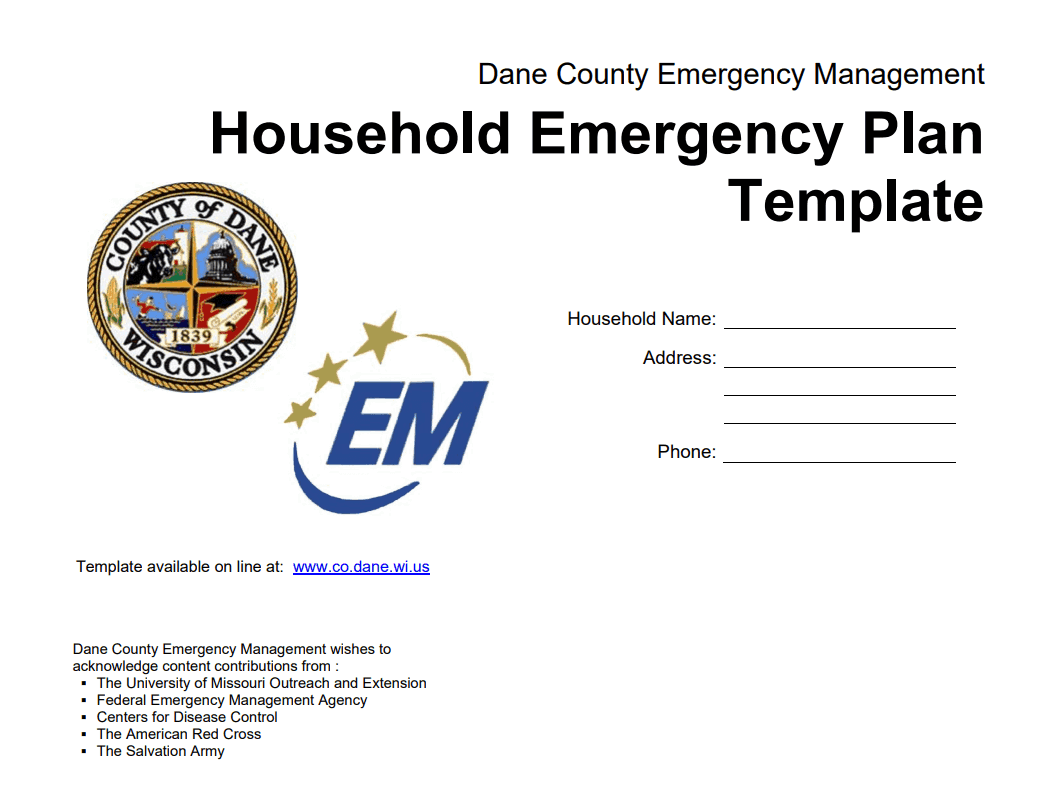
Download Family Emergency Plan Sheet Templates
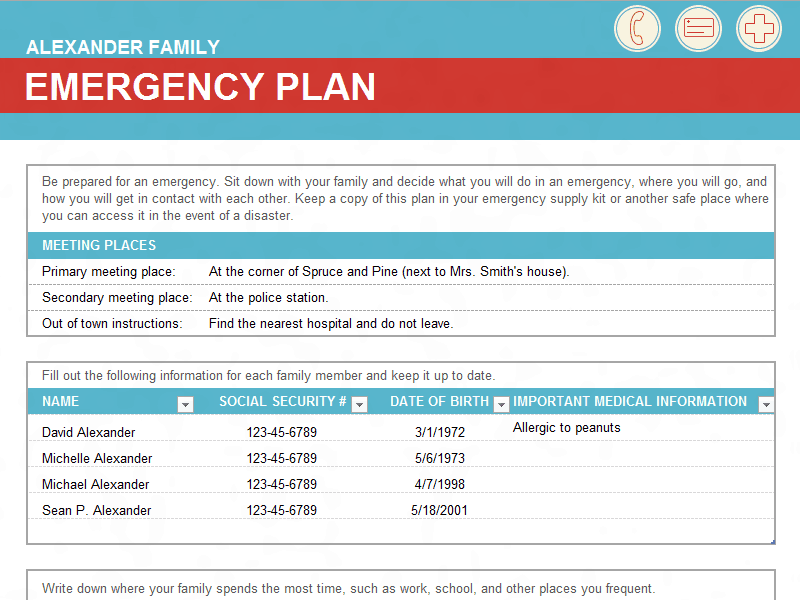
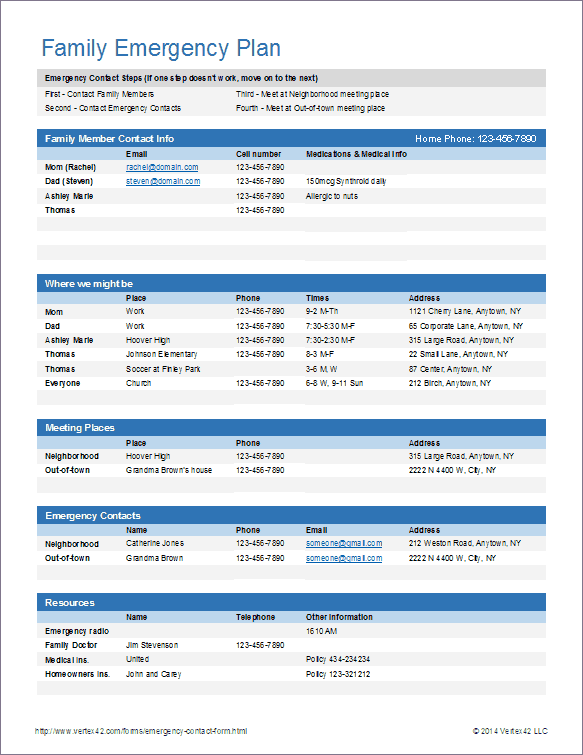
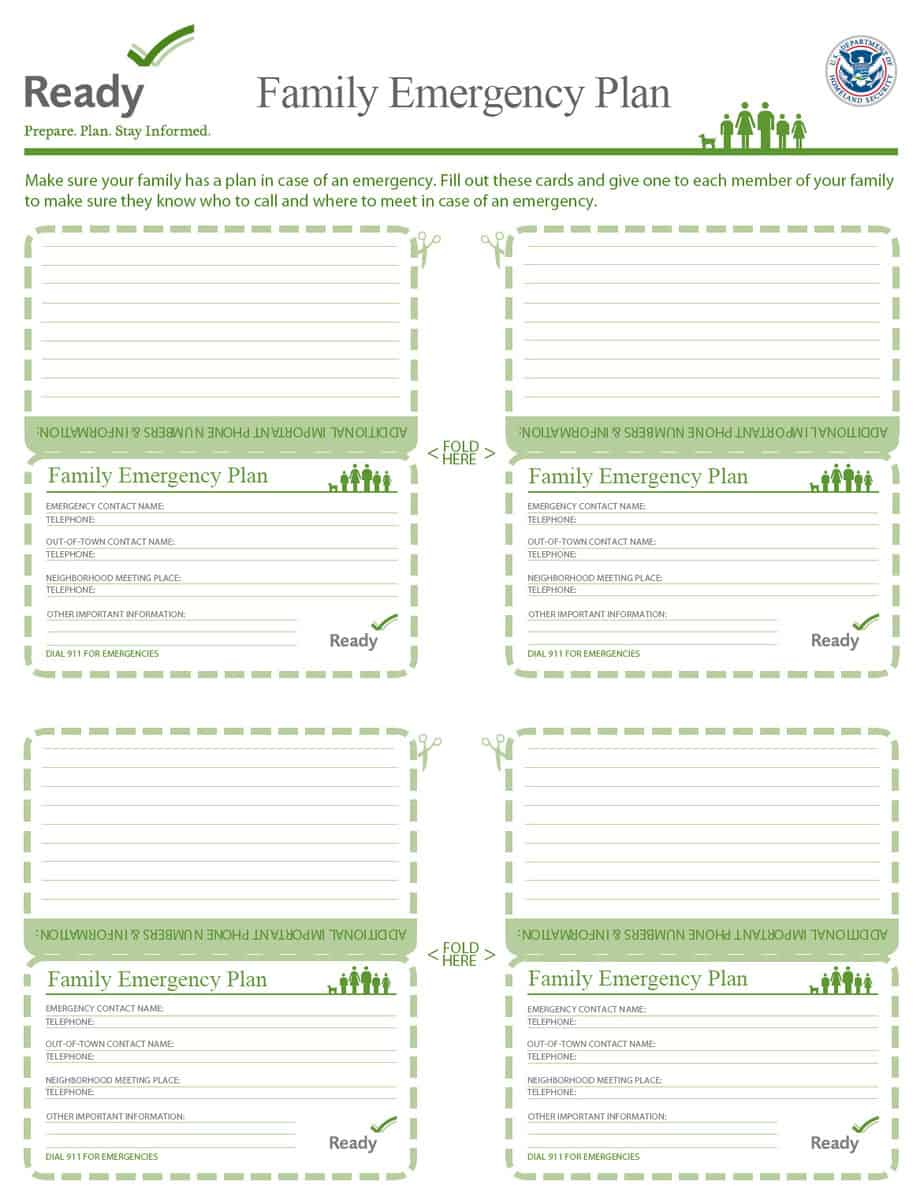
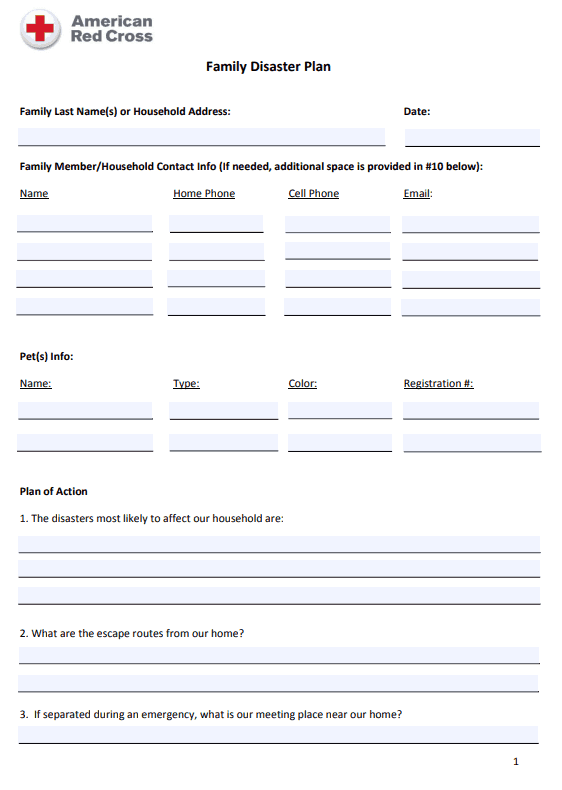
Choose from our clean, organized formats below. All files are 100% free, fully editable, and formatted for standard letter-sized paper.



Frequently Asked Questions
Where should I keep our family emergency plan sheet?
Keep a primary printed copy on your refrigerator or central bulletin board. Additional copies should go into your emergency supply kit (go-bag), children’s school backpacks, and family vehicles.
How often should a family emergency plan be updated?
Review and update your sheet at least twice a year. Great times to do this are during daylight saving time changes or at the start of a new school year.
Can I edit these templates in Google Docs?
Yes! Simply download the Microsoft Word (.docx) version, upload it to your Google Drive, and open it with Google Docs to customize and print for free.
Who should be the out-of-area emergency contact?
Choose a reliable relative or friend who lives far enough away that the same disaster is unlikely to affect them. Every family member should have their number saved and written down, and they should know they have been chosen for this role.
Should children have their own copy of the plan?
Yes. Give school-age children a simplified wallet card with key phone numbers and the family meeting places. Younger children can keep a copy in their school bag that a teacher can read if needed.
What is the difference between an emergency plan and an emergency kit?
The plan is the written information: who to call, where to meet and what to do. The kit is the physical supplies, such as water, food, medicine and a flashlight. You need both, and your plan sheet should say where the kit is kept.
Building a complete household preparedness routine? Use our daily use checklist templates to track your emergency kit supplies, rotate stored food before it expires with these weekly meal plan templates, and keep school runs, work shifts and drill dates organized with our daily schedule templates.
Final Thoughts
An emergency is the worst time to search for phone numbers or decide where to meet. Spending one evening filling in a free family emergency plan sheet template gives your household a clear, printed guide that everyone can follow. Download a template above, complete it together, practice it, and review it every six months so your family is always ready.