Shipping goods across borders? A correct commercial invoice is the key document customs officers use to clear your shipment and calculate duties. On this page you can download 7 free commercial invoice templates in Excel and Word, ready for exporters, importers, freight forwarders and small online sellers. Each export invoice template includes fields for shipper and consignee details, HS codes, country of origin, quantity, unit value, Incoterms, currency and total invoice value, so you can prepare accurate customs paperwork in minutes.
Choose a format: Use Excel if you prefer a spreadsheet layout, or Word if you prefer a document layout. Check any formulas and totals before sending an invoice. Complete the exporter, buyer, goods, value, origin and shipping fields required for your shipment, and confirm requirements with your carrier or customs broker.
Download Commercial Invoice Templates
Compare the previews below and choose a layout that fits your task. Each download shows its actual file format. Choose from five Excel spreadsheets and two Word documents. Open the download in compatible software and check its fields before use.
1. Commercial invoice template for international shipment (XLSX)
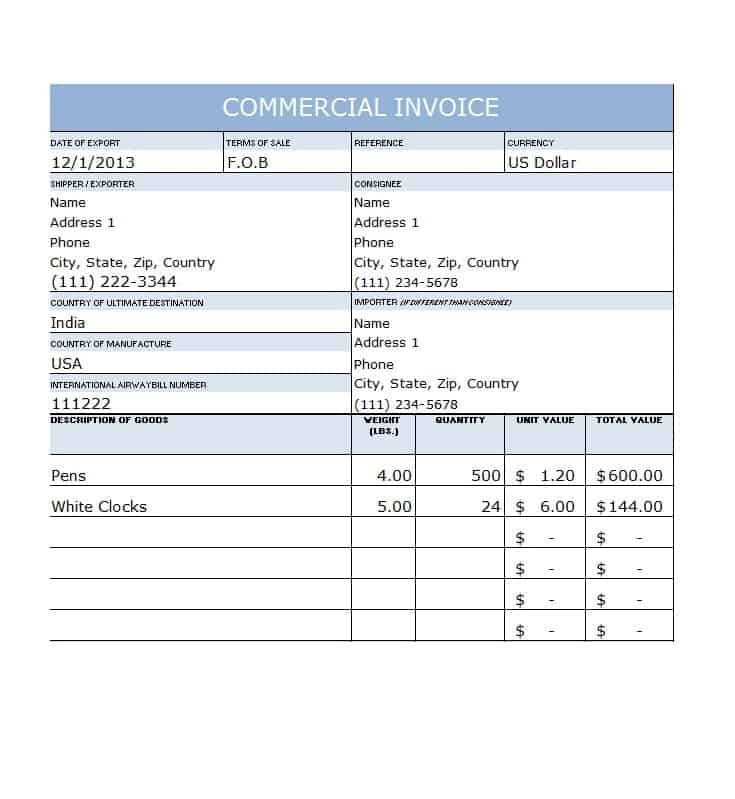
Download commercial invoice template 1 — Excel (XLSX)
2. Commercial invoice format for export goods (XLSX)
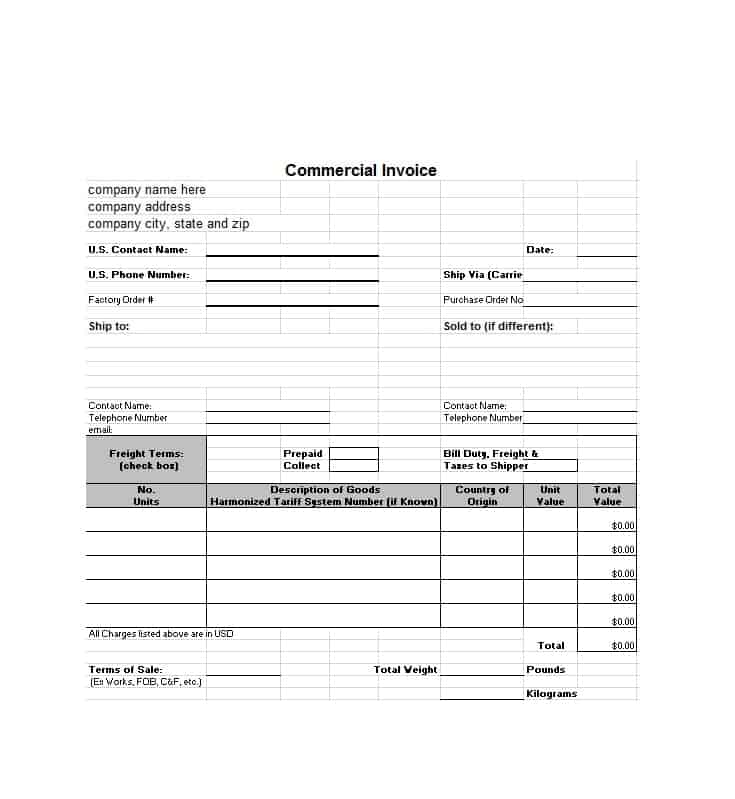
Download commercial invoice template 2 — Excel (XLSX)
3. Commercial invoice template in Excel (XLSX)
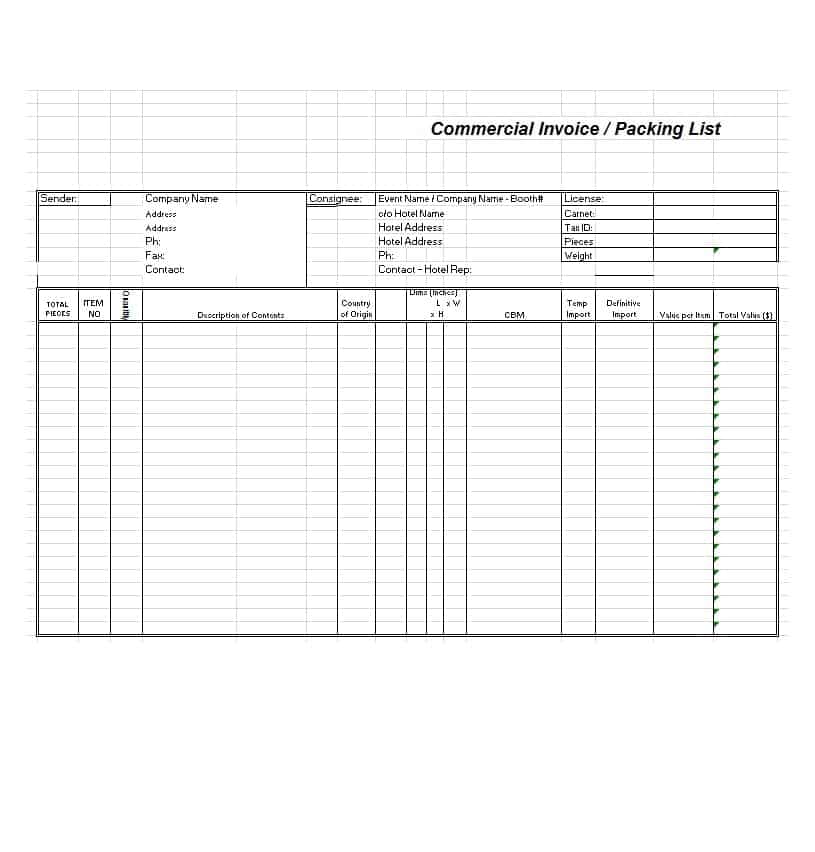
Download commercial invoice template 3 — Excel (XLSX)
4. Commercial invoice for customs clearance (XLSX)
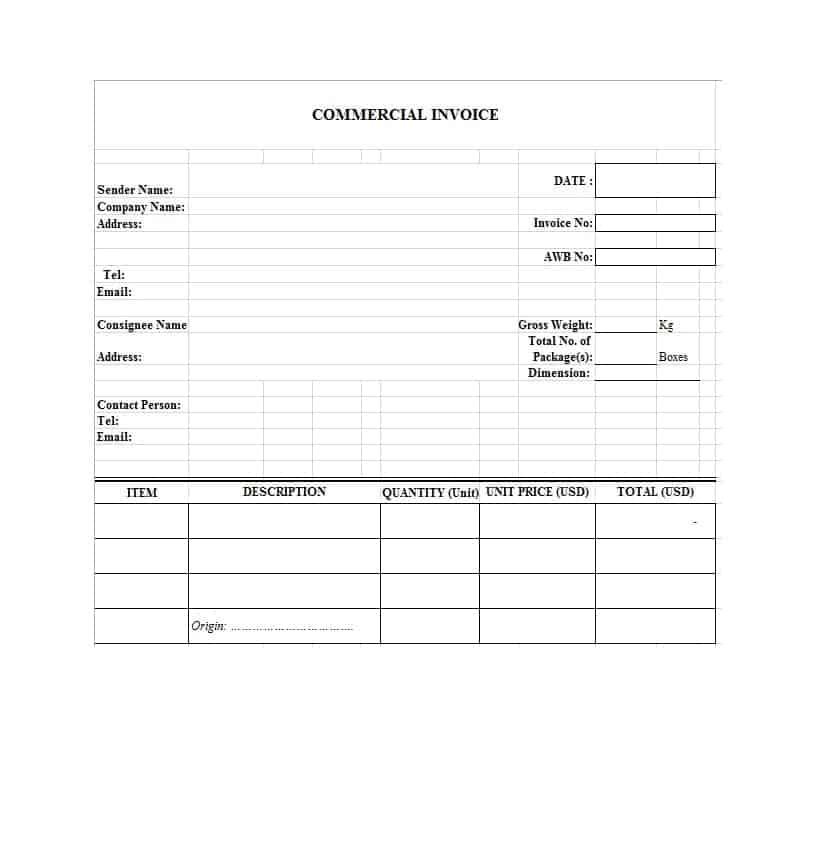
Download commercial invoice template 4 — Excel (XLSX)
5. Printable commercial invoice template (DOCX)

Download commercial invoice template 5 — Word (DOCX)
6. Commercial invoice template in Excel (XLSX)
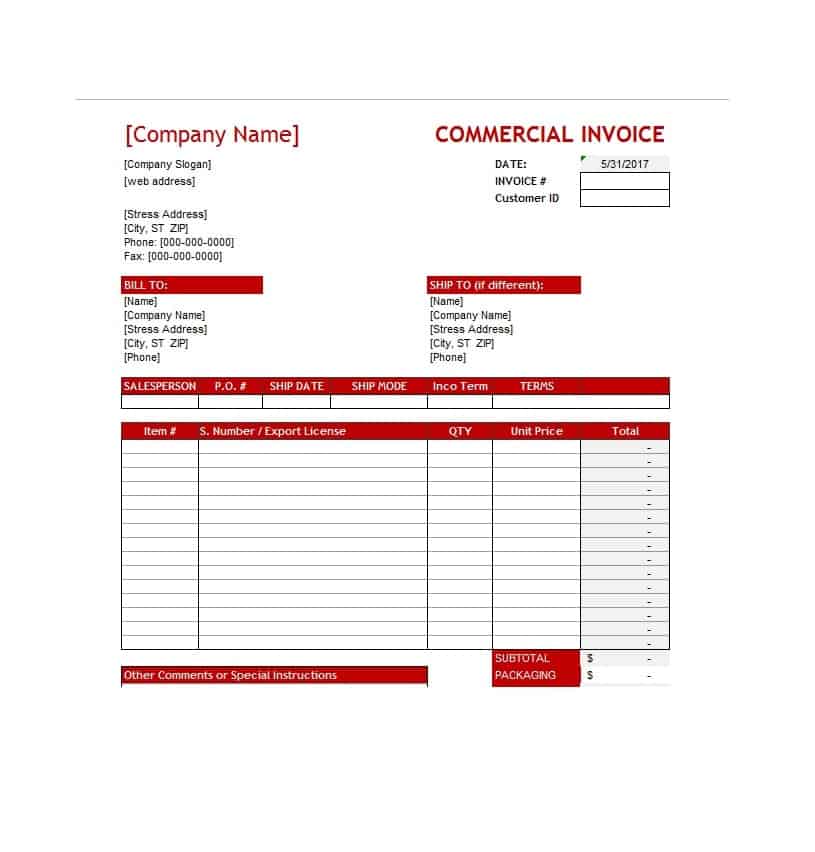
Download commercial invoice template 6 — Excel (XLSX)
7. Sample commercial invoice for exporters (DOC)
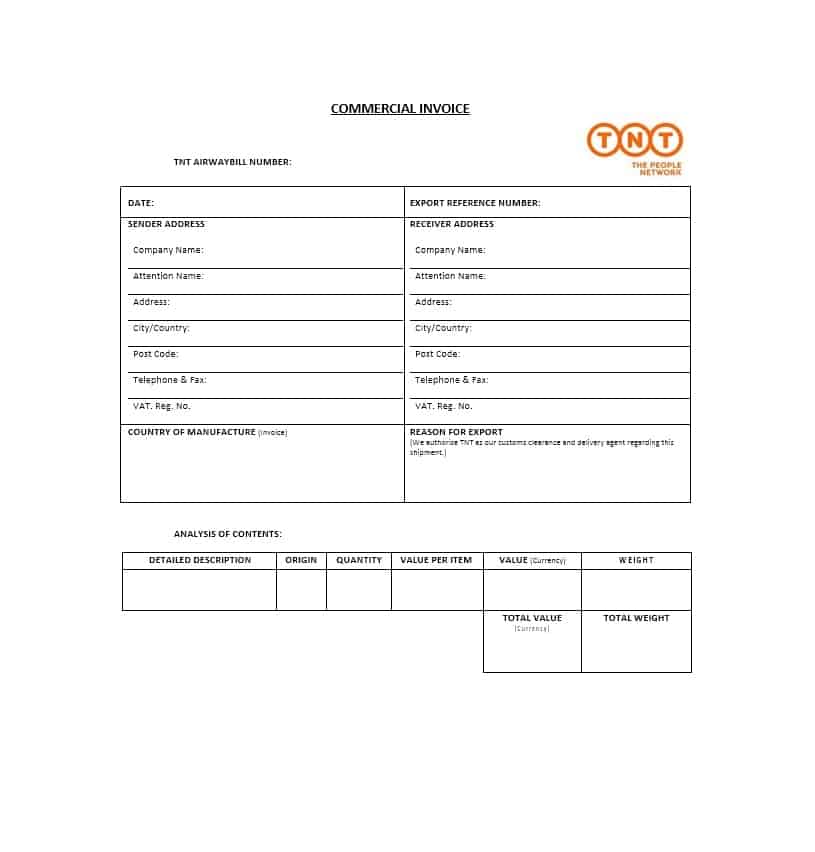
Download commercial invoice template 7 — Word (DOC)
What Is a Commercial Invoice?
A commercial invoice is the main document used in international trade to describe goods being shipped from a seller (exporter) to a buyer (importer) in another country. Customs authorities in the importing country use it to check what is being imported, confirm its value and origin, and calculate import duties and taxes. Freight forwarders, customs brokers, carriers and banks also rely on the commercial invoice, so it must be accurate, complete and consistent with the other shipping documents such as the packing list, bill of lading or airway bill.
Unlike a normal sales invoice, a commercial invoice is not only a request for payment. It is also a customs declaration document. Missing or incorrect information can lead to shipments being held at the border, extra inspections, penalties or higher duties, which is why using a well-structured commercial invoice template is so valuable for exporters of every size.
What Information Should a Commercial Invoice Include?
Exporter (shipper) details: Company name, full address, phone number, email and tax or export registration number.
Importer (consignee) details: The buyer’s name, delivery address and, where required, the importer’s tax ID or customs number. If the goods are delivered to a different party, list both the buyer and the consignee.
Invoice number and date: A unique reference number and the date of issue, plus any purchase order or contract number agreed with the buyer.
Description of goods: A clear, specific description of each item, including material, use and model number. Vague words such as “samples” or “parts” often cause customs delays.
HS code: The Harmonized System tariff classification code for each product, which customs uses to determine duty rates.
Country of origin: The country where each product was manufactured or substantially transformed.
Quantity, unit value and total value: Number of units, price per unit, line totals and the overall invoice value, with the currency clearly stated.
Incoterms: The agreed delivery term, such as EXW, FOB, CIF or DAP, which shows who pays for freight and insurance and where responsibility transfers.
Shipping details: Number of packages, gross and net weight, dimensions, mode of transport and tracking or bill of lading number.
Reason for export and declaration: Whether the goods are sold, returned, sent for repair or gifted, plus a signed statement that the information is true and correct.
Commercial Invoice vs Proforma Invoice vs Sales Invoice
A commercial invoice accompanies goods when they are shipped and is used for customs clearance and payment. A proforma invoice is a preliminary quote-style invoice sent before the shipment, often so the buyer can arrange payment, a letter of credit or an import license; you can find ready-made versions in these proforma invoice templates. A normal domestic sales invoice requests payment for goods sold within the same country and does not usually need HS codes or country of origin. If you buy materials from suppliers, keep their bills organized with these purchase invoice templates.
How to Fill Out a Commercial Invoice Template
Step 1 – Choose the right template: Use an Excel commercial invoice template if you want quantities and totals calculated automatically, or a Word template if you prefer a simple editable document.
Step 2 – Add your company details: Insert your logo, address, contact information and export registration number once, then save the file as your master template.
Step 3 – Enter buyer and consignee information: Copy names and addresses exactly as they appear on the purchase order and shipping label.
Step 4 – List each product: Add the description, HS code, country of origin, quantity, unit price and line total for every item. Match the figures with your quotation or sales contract.
Step 5 – Add shipping and Incoterms details: Enter the number of packages, weights, transport mode and the agreed Incoterm.
Step 6 – Review, sign and attach: Double-check totals and currency, sign the declaration, and send copies with the shipment and to your freight forwarder or customs broker.
Tips to Avoid Customs Delays
Make sure the commercial invoice, packing list and bill of lading show the same quantities, weights and values. Declare the real transaction value; under-valuing goods can lead to fines or seizure. Use plain English descriptions and check the latest HS codes for your products. Keep copies of every commercial invoice and related payment vouchers for your accounting and audit records. Requirements can vary by country and product, so confirm any special rules with your freight forwarder, customs broker or the destination country’s customs authority before shipping.
Who Uses Commercial Invoice Templates?
Commercial invoice templates are used by manufacturers exporting finished products, wholesalers and distributors selling to overseas customers, e-commerce sellers shipping orders internationally, freight forwarders preparing documents for clients, and small businesses sending samples or spare parts abroad. Even individuals sometimes need a commercial invoice when sending gifts or personal goods by courier. A good template ensures that every shipment is documented the same way, whoever prepares it.
Digital copies and record keeping: Many carriers and customs systems now accept electronic commercial invoices. Save each invoice as a PDF with a clear file name that includes the invoice number and buyer, and keep it together with the packing list, shipping documents and proof of payment. Organized records make it easier to answer customs queries, claim duty refunds, handle returns and prepare year-end accounts.
Frequently Asked Questions
What is a commercial invoice used for?
It is used by customs authorities to identify imported goods, confirm their value and origin, and calculate duties and taxes. It also serves as the seller’s bill to the buyer.
Who prepares the commercial invoice?
The exporter or seller usually prepares and signs the commercial invoice, sometimes with help from a freight forwarder.
Is a commercial invoice required for every international shipment?
Most commercial shipments require one. Couriers often ask for a commercial invoice even for samples and gifts, so check with your carrier.
What is the difference between a commercial invoice and a packing list?
A commercial invoice shows the value and description of goods for customs and payment, while a packing list shows how the goods are packed, including package numbers, weights and dimensions.
Can I create a commercial invoice in Excel?
Yes. An Excel commercial invoice template calculates line totals and the invoice total automatically, reducing errors.
Are these commercial invoice templates free?
Yes. All 7 commercial invoice templates on this page are free to download and edit in Excel or Word.
Conclusion
An accurate commercial invoice keeps your goods moving smoothly through customs and gets your buyer’s payment on track. Download a free commercial invoice template from this page, add your company details and use it for every international shipment.