Managing employee payroll accurately and professionally is a fundamental requirement for any business, regardless of size. A well-formatted salary slip (or payslip) serves as official proof of income, ensures total financial transparency between employer and employee, and simplifies tax reporting.
Whether you run a small business, manage HR for an expanding startup, or operate as an independent contractor, having instant access to customizable, pre-designed payroll forms saves valuable hours every month.
This guide covers everything you need to know about salary slip design, statutory components, legal importance, and how to utilize our Pack of 28 Free Pay Salary Slip Templates (available in editable Microsoft Excel and Word formats).
What Is a Salary Slip?
A salary slip—also commonly referred to as a payslip, pay stub, or payroll slip—is an official document issued by an employer to an employee upon receiving their monthly wage or wage distribution.
It provides an itemized breakdown of earnings, statutory deductions, bonuses, reimbursements, and net take-home pay for a given pay period.
       +-------------------------------------------------------+
       |                  COMPANY NAME & LOGO                  |
       |               Official Monthly Salary Slip            |
       +-------------------------------------------------------+
       | Employee ID: EMP-1024       Pay Period: August 2026   |
       | Employee Name: John Doe     Designation: Software Eng |
       +-------------------------------------------------------+
       | EARNINGS             (USD) | DEDUCTIONS         (USD) |
       +----------------------------+--------------------------+
       | Basic Salary        $4,000 | Income Tax (PAYE)   $550 |
       | House Rent Allowance $1,200 | Health Insurance    $150 |
       | Transport Allowance   $300 | Retirement / 401(k) $200 |
       | Performance Bonus     $500 | Advanced Loan       $0.0 |
       +----------------------------+--------------------------+
       | TOTAL GROSS:        $6,000 | TOTAL DEDUCTIONS:   $900 |
       +-------------------------------------------------------+
       | NET DISTRIBUTED SALARY:                  $5,100.00    |
       +-------------------------------------------------------+
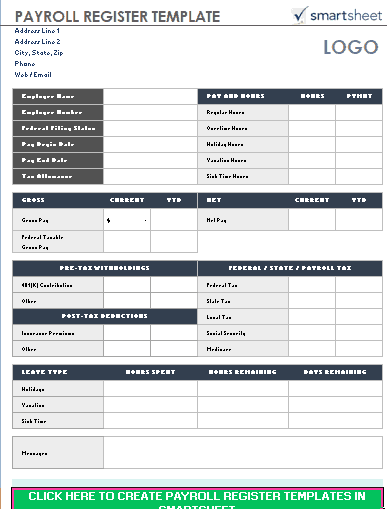
Key Differences: Salary Slip vs. Pay Stub vs. Payroll Register
While these terms are frequently used interchangeably, they serve slightly different organizational functions:
| Feature | Salary Slip / Payslip | Pay Stub | Payroll Register |
| Primary Recipient | Employee | Employee | HR / Payroll Manager |
| Primary Scope | Individual monthly/bi-weekly earnings breakdown | Attached to physical paycheck or direct deposit receipt | Master summary of all employees’ pay for a given period |
| Format | Detailed document (PDF / Print) | Compact stub attached to check or digital record | Master spreadsheet or tabular ledger |
| Legal/Financial Use | Visa applications, loans, tax filing | Quick record of payment | Internal audit & corporate balance sheets |
Essential Components of a Professional Salary Slip
To ensure your payslips meet accounting standards and legal scrutiny, every generated document must contain two main sections: Header/Employee Information and Financial Breakdowns.
1. General & Organizational Information
- Employer Metadata: Business/Company name, corporate registration number, physical office address, and official logo.
- Employee Metadata: Full legal name, unique Employee ID code, job title/designation, and department.
- Payment Reference Period: The specific month and year (e.g., August 2026) or pay frequency range (bi-weekly, weekly).
- Banking & Tax Identifiers: Bank account number, tax ID / Social Security / National Insurance number, and pay date.
2. Earnings Section (Gross Income Breakdown)
- Basic Salary: The core fixed payment agreed upon in the employment contract before any additions or subtractions.
- House Rent Allowance (HRA): Allowance paid to assist employees with housing costs.
- Conveyance / Travel Allowance: Compensation for commuting expenses incurred for work purposes.
- Special / Performance Allowances: Discretionary allowances allocated for individual performance or specific work conditions.
- Overtime Pay: Compensation calculated based on extra hourly work logged beyond standard work hours.
- Bonuses & Commissions: Annual, quarterly, or incentive-based compensation additions.
3. Deductions Section (Statutory & Non-Statutory)
- Income Tax / PAYE: Mandatory local or state income withholding tax based on tax brackets.
- Retirement / Social Security Contributions: Employee contributions toward government or private pension funds (e.g., 401k, EPF, Provident Fund).
- Health Insurance / Benefits: Deductions for medical insurance coverage or wellness plans.
- Loan / Advance Repayments: Deductions for personal loans or salary advances provided earlier by the company.
4. Net Salary Output
- Gross Pay: The total sum of all earnings prior to deductions.
- Total Deductions: The total sum of all statutory and voluntary subtractions.
- Net Pay (Take-Home Salary):
Gross Pay - Total Deductions. This represents the exact figure credited to the employee’s bank account.
Why Every Business Needs a Standardized Salary Slip System
                  +-----------------------------------+
                  |  BENEFITS OF STANDARDIZED SLIPS   |
                  +-----------------------------------+
                                    |
        +---------------------------+---------------------------+
        |                           |                           |
        v                           v                           v
+---------------+           +---------------+           +---------------+
| Legal & Tax   |           | Employee      |           | Financial     |
| Compliance    |           | Trust & Transparency       | Credit & Loans|
+---------------+           +---------------+           +---------------+
- Proof of Income for Employees: Employees depend heavily on salary slips to verify income when applying for mortgage loans, car financing, credit cards, renting apartments, or acquiring travel visas.
- Tax Audits & Compliance: Standardized payroll records protect businesses during corporate audits. They provide verifiable paper trails of tax withheld at source.
- Dispute Resolution: Clear breakdowns prevent payroll conflicts regarding overtime, missing shifts, or unexpected tax withholdings.
- Professional Brand Reputation: Providing clean, clear, well-structured pay documentation reinforces company credibility and builds trust with employees.
Why Use Excel & Word Templates Instead of Expensive Payroll Software?
While large enterprises rely on enterprise payroll software systems that cost thousands of dollars annually, small-to-medium enterprises (SMEs), freelancers, and startups often find these platforms unnecessary and expensive.
Benefits of Pre-Designed Templates:
- Zero Software Subscriptions: Completely free to download and use indefinitely without recurring monthly fees.
- Built-in Formula Automation: Microsoft Excel templates include pre-built formulas that auto-calculate Gross Pay, Deductions, and Net Pay instantly without human calculation errors.
- 100% Fully Customizable: Modify headers, branding colors, fonts, tax field names, and structures within seconds.
- Offline Access & Privacy: Keep sensitive salary data locally on your computer instead of uploading corporate financial details to third-party cloud servers.
How to Customize and Use Your Salary Slip Templates
Follow this quick guide to adapt any downloaded template for your organization:
Step 1: Add Your Corporate Branding
Open the template in Microsoft Word or Microsoft Excel. Replace the generic placeholder text at the top with your official business name, registered address, contact information, and high-resolution company logo.
Step 2: Configure Pay Variables and Categories
Adjust line items under Earnings and Deductions to match your country’s tax structure and corporate allowance policy. Rename fields as needed (e.g., change Provident Fund to 401(k) or Pension).
Step 3: Populate Employee Data
Enter the employee’s details, pay period, basic salary, and logged allowances or overtime hours.
Step 4: Verify Formulas (Excel Version)
Ensure formulas like =SUM() reflect your row modifications. Net Pay should always update dynamically:
$$\text{Net Pay} = \text{Total Gross Earnings} – \text{Total Deductions}$$
Step 5: Export to PDF or Print
Save the finalized sheet as a PDF to lock the document against unauthorized alterations before emailing it to the employee, or print a copy for direct cash payments.
Explore the Pack of 28 Free Salary Slip Templates
Our comprehensive collection includes 28 unique designs, catering to diverse business needs—from minimal formats for small setups to multi-allowance corporate templates.
Below are highlights of popular layouts included in the 28-Template Bundle:
+-----------------------------------------------------------------------+
|                        FEATURED TEMPLATE TYPES                        |
+-----------------------------------------------------------------------+
| 1. Modern Corporate Payslip (Detailed Allowances & Tax Subtotals)     |
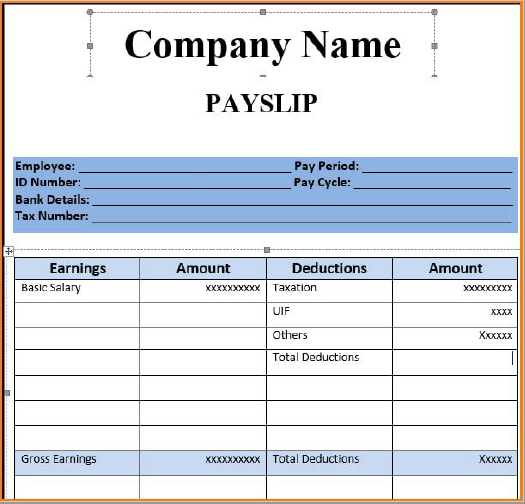
| 2. Minimalist Single-Page Slip (Ideal for Small Business & Shops)     |
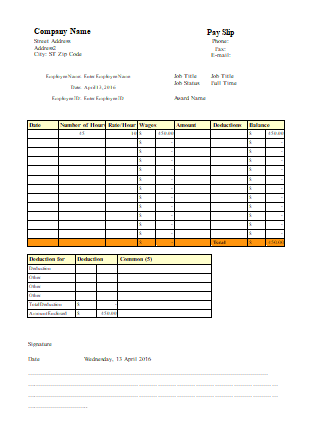
| 3. Hourly & Overtime Pay Slip (Includes Hours Worked x Rate Column)    |
| 4. Triplicate / Multi-Employee Sheet (Print 3 slips per page)         |
| 5. Executive / Management Salary Slip (With Bonus & Stock Breakdown) |
+-----------------------------------------------------------------------+
Highlights of Included Templates:
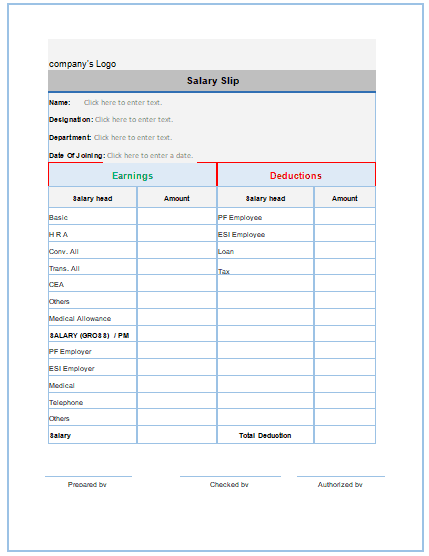
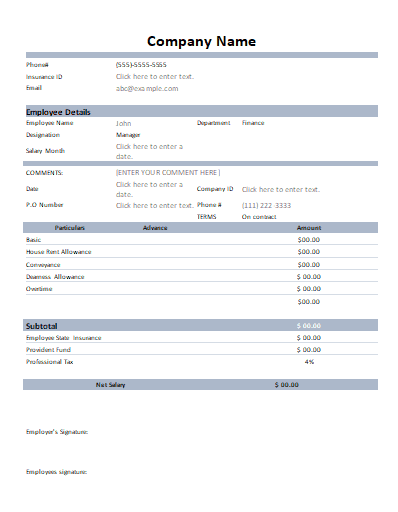
- Classic Corporate Layout: A clean design featuring clear section dividers, designated approval signature lines, and comprehensive tax line items.
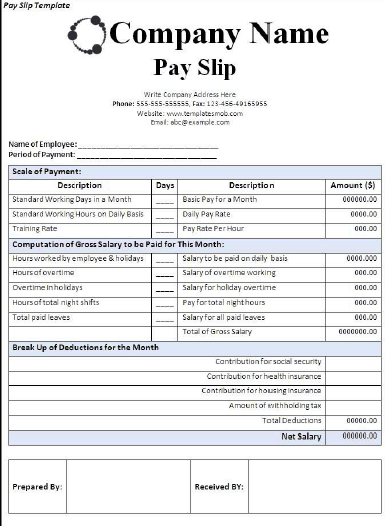
- Compact Bi-Weekly / Weekly Slip: Formatted for companies with non-monthly pay schedules. Includes fields for total hours, regular rate, and overtime multiplier.
- Multi-Currency & Remote Contractor Format: Designed for remote setups and international teams, allowing flexible currency symbols and project-based breakdowns.
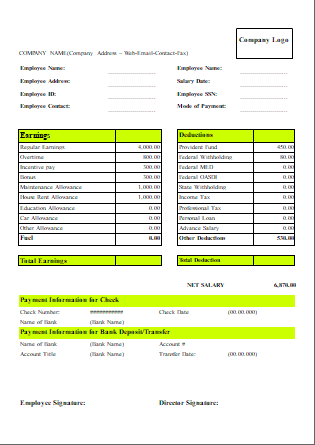
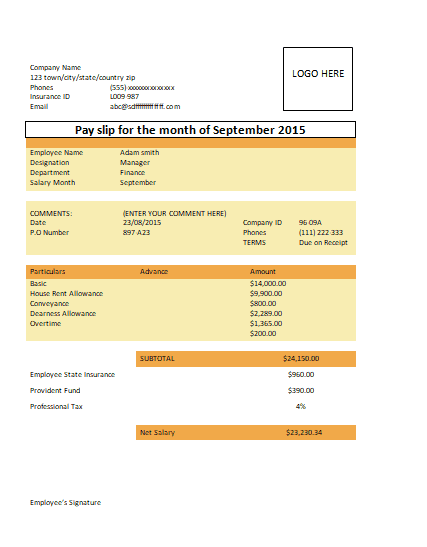
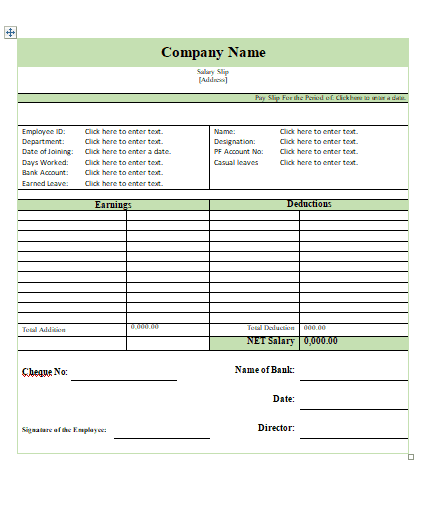
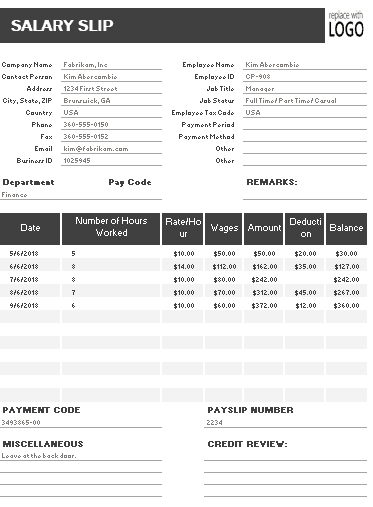
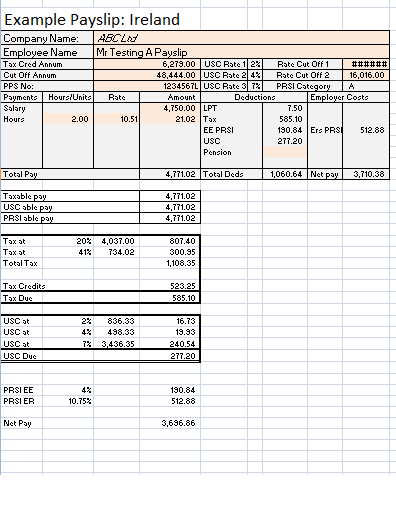
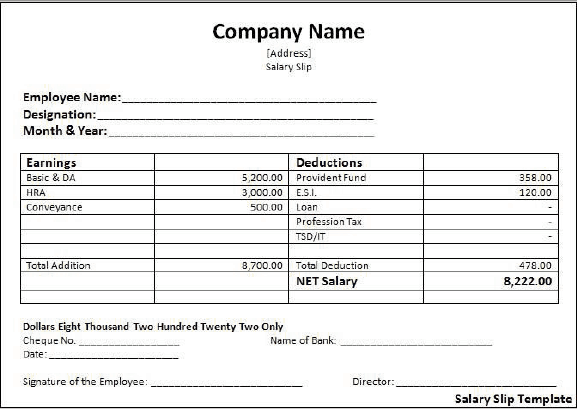
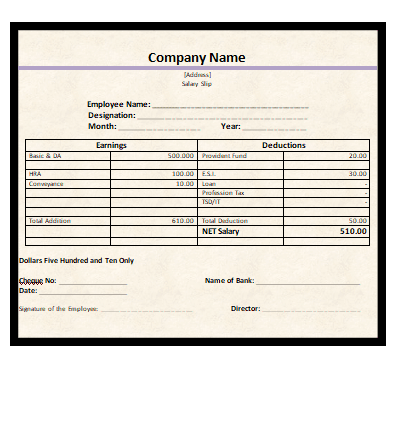
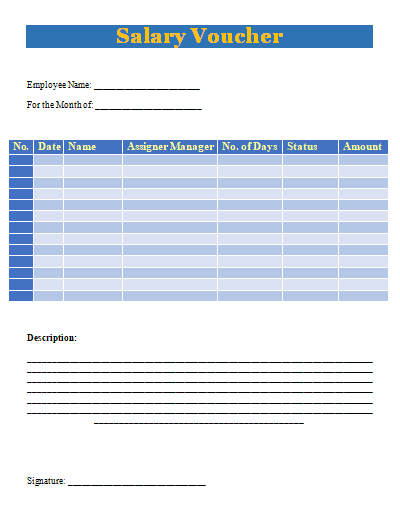
Wanna know about salary slips or pay slips and need excellent examples of it with templates then this is what this page is created for. I personally have researched all over the internet for quality salary slip templates to make my own slip but unfortunately it is very difficult to find. So to save your from this pain I’ve accumulated all the best templates and examples here in one pack absolutely free for you. So basically now please follow below links to reach what your want to read first on this page. You can also find related templates like Pay slip templates and Pay stub templates at this site.
Salary Slip Template Pack:

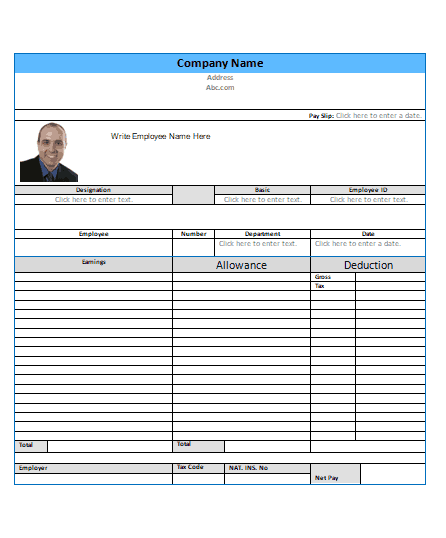
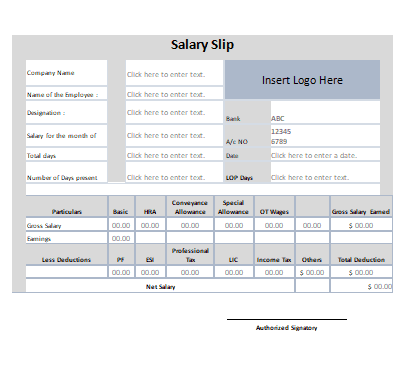
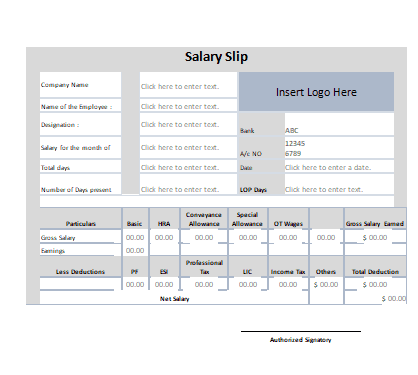
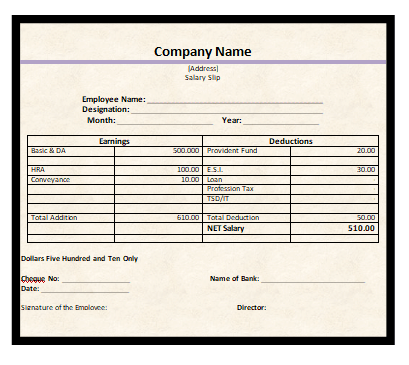
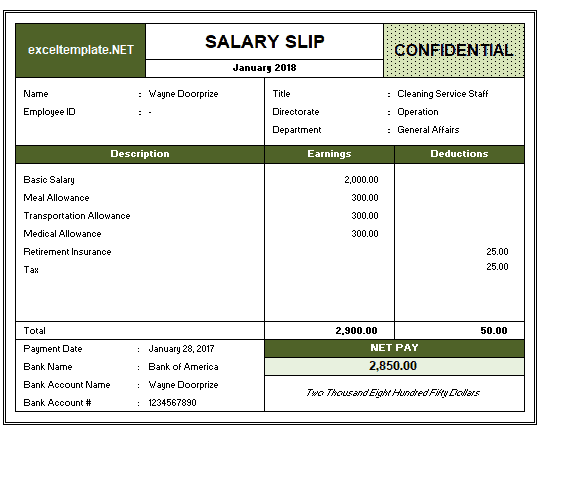
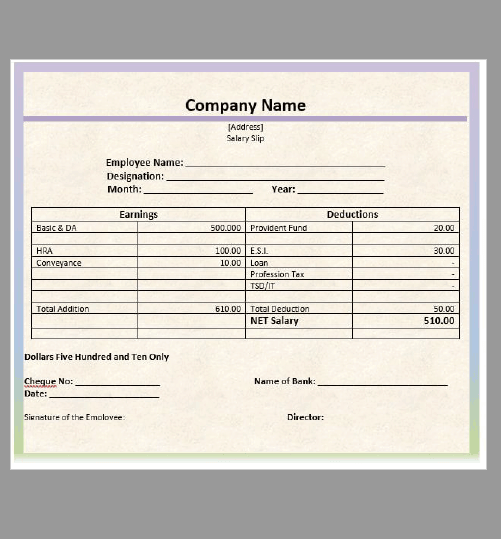
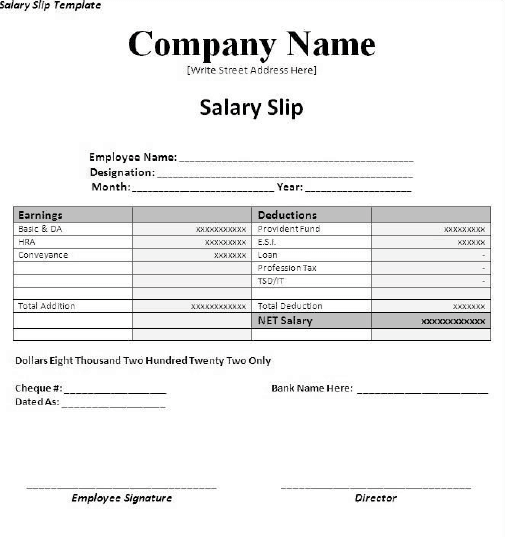
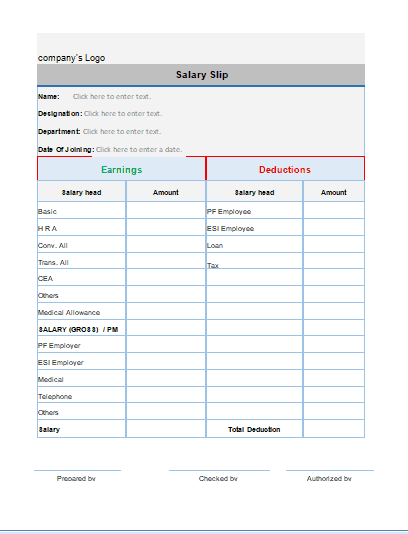
Use these templates as per your wish. Purpose of adding all these files in one pack is that you can easily download these all together and then on your own computer choose the best one for you . But in case if you want to prefer using this site for downloading individual templates with snapshot so that you can decide which one is better for you then see below.
Salary Slip Templates with Snapshots:
Click Image to Download

Frequently Asked Questions (FAQ)
Is a salary slip legally binding?
Yes. A salary slip issued on official corporate letterhead—or sent directly from an official corporate email address—serves as a legally valid document for proof of income, tax filings, and legal verifications.
Can I create salary slips in Microsoft Word instead of Excel?
Yes. Microsoft Word is ideal for creating sleek, visually detailed payslip layouts. However, Microsoft Excel is recommended for auto-calculating totals, complex tax formulas, and preventing manual math errors.
What is the difference between Gross Salary and Net Salary?
- Gross Salary: The total earnings accrued by an employee before any tax deductions, health insurance, or retirement contributions are subtracted.
- Net Salary: The final amount of money received by the employee after all statutory taxes and voluntary deductions have been subtracted (also called take-home pay).
Why do banks ask for 3 to 6 months of salary slips for loans?
Banks and financial institutions review recent salary slips to confirm employment stability, verify recurring regular income, assess existing debt obligations, and ensure loan repayment capability.
Are these 28 salary slip templates completely free to download?
Yes! The entire Pack of 28 Pay Salary Slips Templates on Daily Life Docs is 100% free to download, edit, customize, and use for personal or commercial payroll purposes.